
Winter lawn care: keeping St. Augustine grass healthy through the cool months
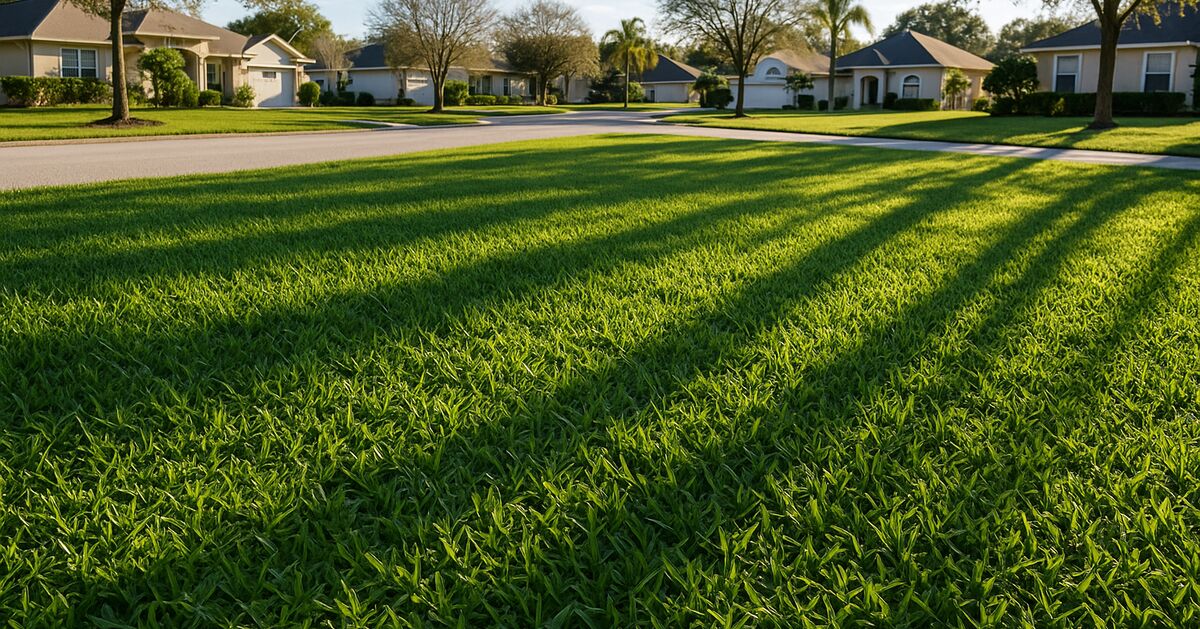
Florida winters fool a lot of homeowners. The grass still looks mostly green, the sun still comes out most days, and it's easy to assume you can keep doing what you've been doing all summer. But St. Augustine grass enters a very real slow-down period from roughly November through February, and treating it like a summer lawn during those months is one of the most reliable ways to limp into spring with thin turf, lingering fungal patches, or a root system that's been pushed too hard at exactly the wrong time.
This guide covers the cool-month rhythm your St. Augustine lawn actually needs, what to keep up with, and what to put away until March.
What "dormancy" really means for St. Augustine in Southwest Florida
St. Augustine grass doesn't go fully dormant the way northern grasses do. Down here in Manatee County, Bradenton, Palmetto, and Parrish, our winters rarely stay cold enough long enough to turn a lawn fully tan and dormant. What you get instead is semi-dormancy: the grass slows its growth dramatically, root development drops off, and the plant's ability to recover from stress takes a serious hit.
That reduced recovery capacity is the most important thing to keep in mind. A mowing nick that would barely matter in July can open the door to disease in December. A heavy fertilizer push that would green up your lawn in May can burn shallow roots and feed fungi in winter. The plant is working on a fraction of its summer horsepower, so everything you do needs to account for that.
Mowing in winter: go less often, not lower
Growth slows, so mowing frequency drops naturally. Most St. Augustine lawns in our area need mowing every two to three weeks in winter, compared to every one to two weeks in summer. Let the grass tell you when it's ready rather than sticking to a rigid calendar.
The height, however, should stay the same or even go slightly higher. Resist the temptation to cut short "so you don't have to mow as often." Scalping weakens the grass when it has the least capacity to recover, and low cuts thin out the canopy enough to let weeds grab a foothold in spring. Keep your mowing height at 3.5 to 4 inches for St. Augustine through the cool months.
A few other mowing reminders for winter:
- Keep blades sharp. Dull blades tear grass tissue, and torn tissue invites disease in cool, humid conditions.
- Mow only when the turf is dry. Morning dew or recent rain makes it easier to spread fungal spores across the lawn.
- Mulch your clippings. There's no reason to bag them unless there's an active disease problem.
Fertilizing in winter: put the bag away
This is the single most common winter mistake we see across lawns in Lakewood Ranch, Ellenton, and all the way out to Anna Maria Island. Homeowners want to keep their lawn looking lush, so they push fertilizer in November or December thinking it will help. It does the opposite.
Here's why: nitrogen is the nutrient that drives green leafy growth. In winter, St. Augustine is not in a mode to efficiently process and use a nitrogen push. The excess nitrogen either leaches out of the sandy soil before the roots can absorb it, or it forces a flush of soft, tender growth that is especially vulnerable to cold snaps and fungal disease. Either way, you've wasted money and stressed the grass.
The rule is straightforward: do not apply nitrogen fertilizer to St. Augustine grass after late September in Southwest Florida. Your last feeding of the year should go down in late September or early October at the latest, giving the grass time to harden off before cooler nights arrive.
If your lawn looks a little pale or yellowish in December, that's often normal semi-dormancy coloring, not a deficiency that needs to be corrected. The color will return as temperatures warm in late February and March. If you're genuinely concerned about a micronutrient issue, a soil test is a better guide than reaching for a bag of fertilizer.
Watering in winter: let the rain do more of the work
Winter in our part of Florida is the dry season, but it's also the coolest season, which means evapotranspiration drops significantly. Your lawn is losing far less moisture through its leaves and the soil surface than it was in July. That means your irrigation schedule needs to come down.
A common target for St. Augustine in winter is around one-half to three-quarters of an inch of water per week, compared to an inch or more in summer. If your irrigation controller is still set to a summer schedule, you're almost certainly overwatering, which keeps the soil wet for longer stretches and creates ideal conditions for fungal problems.
Overwatering in cool, humid conditions is one of the primary triggers for diseases that plague St. Augustine lawns in our area. Our blog has detailed coverage of Take-All Root Rot and gray leaf spot, both of which can take hold or persist through winter when moisture stays high.
Practical steps for winter irrigation:
- Adjust your controller to a winter schedule in early November.
- Water in the early morning so the grass has time to dry before nightfall.
- Skip irrigation entirely in weeks where you get a half inch or more of rainfall.
- Walk your lawn after dry spells and look for the early signs of wilt (a grayish-blue tint to the blades, or footprints that don't spring back) before running the system.
Weed control in winter: a better window than you think
One upside of the cool months is that St. Augustine's main warm-season competitors are also sleeping. Crabgrass, dollar weed, and summer annuals are largely out of the picture. What you do encounter in winter are cool-season weeds, things like henbit, lawn burweed (also called sticker weed), chickweed, and annual bluegrass.
Lawn burweed is the one to take most seriously. It germinates in fall, grows quietly through winter, and then produces the small spiny seed pods that poke bare feet all spring. The window to treat it effectively is from November through January, while the plants are still small. Once the pods set in late winter, control becomes much harder and you're mostly just managing misery until they die back.
A broadleaf herbicide applied in November or December, when burweed is young and actively growing, is far more effective than anything you spray in March after your family has already been complaining about stickers for a month.
Pre-emergent herbicides can also be applied in late October or early November to prevent cool-season weeds from germinating. Just be careful to choose products labeled safe for St. Augustine grass and follow the timing recommendations, since applying too late misses the germination window entirely.
Watching for cold damage: know what to expect
Manatee County doesn't get hard freezes often, but it does get occasional cold snaps, especially inland areas like Parrish and areas along I-75. St. Augustine is one of the less cold-tolerant Florida grasses and can show damage when temperatures dip below 40 degrees Fahrenheit for extended periods, or below freezing even briefly.
Cold damage shows up as tan, brown, or gray discoloration that may look a lot like disease or drought stress. The key distinguishing feature is the pattern. Cold damage tends to be widespread across exposed areas of the lawn, sometimes favoring low spots where cold air pools, while disease damage often shows as irregular patches or rings.
What to do if you get cold damage:
- Do not mow the damaged grass short trying to "clean it up." Leave the growth in place to protect the crowns and root zone.
- Do not fertilize to try to green it back up quickly. This is the same mistake as winter fertilizing in general, only more tempting because the grass actually looks hurt.
- Be patient. St. Augustine in our climate typically greens back up as temperatures rise in late February and March, often faster than homeowners expect.
- If large areas don't recover by April, that's the time to assess whether you're looking at true crown damage that requires renovation. Our post on whether to replace or nurse back a damaged lawn walks through that decision.
Pest pressure in winter: mostly lower, but not zero
The good news is that the major turf insect pests that plague Southwest Florida lawns through summer and fall drop off significantly in winter. Mole crickets slow down as soil temperatures fall. Chinch bugs, which can devastate St. Augustine through summer, become far less active in cooler weather.
This doesn't mean you should ignore your lawn entirely. Walk it every couple of weeks and look for anything unusual. Fire ant mounds may actually become more visible in winter as ants move closer to the surface to stay warm. Our guide to fire ant control in Manatee County yards is worth a read if you're dealing with mounds popping up in the turf.
What to actually do in January and February
These are the quietest months for St. Augustine lawn care, and that's by design. The to-do list is genuinely short:
- Mow as needed, approximately every two to three weeks at 3.5 to 4 inches.
- Irrigate at a reduced rate and skip weeks with meaningful rainfall.
- Treat lawn burweed if you haven't already (January is still effective).
- Keep an eye on weed emergence and spot-treat as needed with a St. Augustine-safe herbicide.
- Sharpen mower blades if you haven't done it recently.
- Start planning any spring improvements, whether that means new sod, landscaping changes, or adjusting your fertilizer program, so you're ready to act when temperatures consistently hit the upper 70s.
What you should not be doing in January and February:
- Fertilizing with nitrogen.
- Aerating or dethatching (the grass can't recover quickly enough to make this worthwhile).
- Sodding large areas unless you've had a genuine loss and the weather forecast shows warm temperatures ahead for at least three weeks. Our post on new sod and those critical first three weeks explains why timing matters so much.
Getting ready for the spring green-up
The payoff for doing winter right is a lawn that comes out of cool weather strong and fills in quickly once temperatures climb. St. Augustine that was overfed, overwatered, or mowed too short in winter tends to enter spring thin, weedy, and slow to recover.
Target late February to mid-March for your first spring fertilizer application, once you're seeing consistent active growth returning. That's also the time to re-evaluate your irrigation schedule, get your mowing frequency back up, and address any bare patches before summer heat makes them worse.
If you're in Bradenton or any of our surrounding communities and want a second set of eyes on how your lawn is handling the cool season, our team is happy to take a look. You can learn more about our lawn care services or visit our FAQ page for answers to common questions about St. Augustine care year-round. Reach out through our contact page whenever you're ready.
The cool months are a rest period for your lawn. Respect that rhythm, stay out of its way on the big interventions, and keep up with the basics, and your St. Augustine will reward you with a fast, healthy spring green-up right when you want it most.