
Replace the lawn or nurse it back? How to tell which one you need
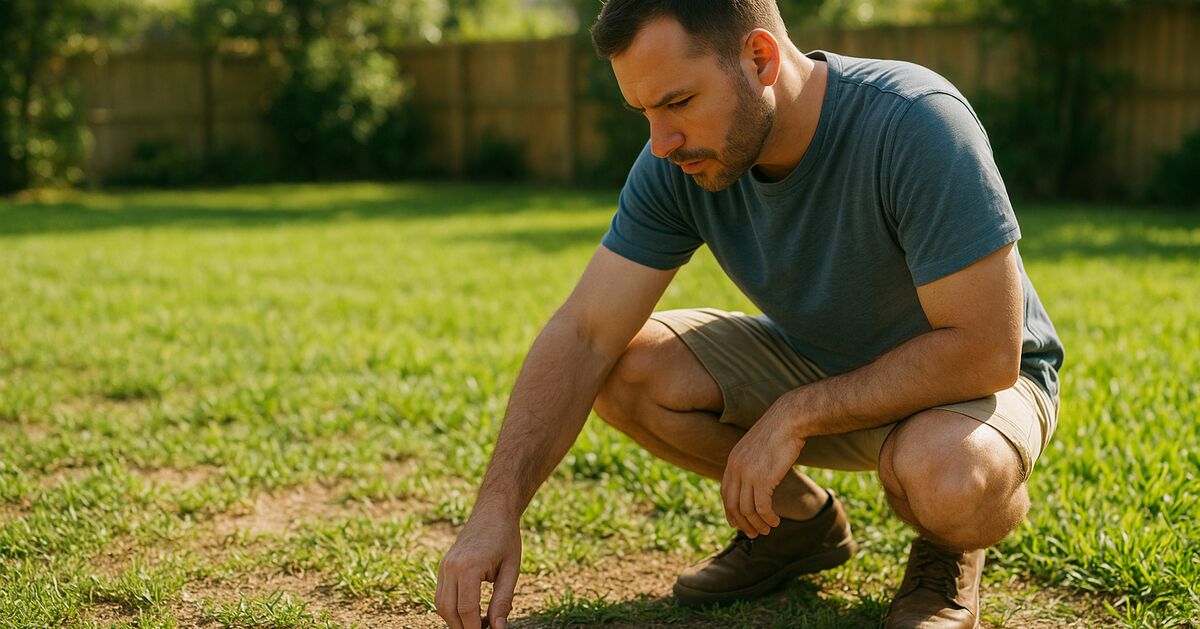
Your lawn looks like it lost a fight, and you're standing in the yard trying to figure out whether to nurse it back to health or just rip it out and start fresh. That decision matters more than most homeowners realize, because choosing wrong costs real money either way.
Spend six months treating a lawn that was never going to recover, and you've wasted time, water, fertilizer, and product costs before eventually resodding anyway. Resod a lawn that could have bounced back with a few targeted treatments, and you've spent significantly more than you needed to. This guide is designed to help you make that call honestly.
Why Florida lawns are especially tricky to diagnose
St. Augustine grass, which covers the vast majority of yards in Bradenton, Lakewood Ranch, Parrish, and Palmetto, is a resilient turf when it's healthy. But it also tends to look dramatically worse than it actually is, or dramatically better than it is, depending on what's going on underneath the surface.
A lawn stressed by drought can look nearly dead and still recover within weeks once irrigation is restored. A lawn that looks patchy but acceptable can be riddled with take-all root rot that will hollow it out completely by next season. Surface appearance alone is a poor diagnostic tool.
The other complication is that Florida's climate means your lawn is under pressure almost every month of the year. The heat and humidity of summer bring fungal diseases like gray leaf spot. The dry season stresses roots. Insects like mole crickets and chinch bugs work quietly until the damage is widespread. A struggling lawn often has more than one problem at once, and that layered stress is what separates a lawn worth saving from one that isn't.
The core question: how much live turf is actually left?
Before anything else, you need an honest coverage estimate. Walk the entire lawn and mentally divide it into sections. For each section, ask: is this area thin but alive, completely bare, or somewhere in between?
Here's a rough framework that holds up in practice:
- More than 60 percent live coverage: In most cases, this lawn is worth nursing back. The remaining healthy turf can spread and fill gaps if the underlying problem is solved.
- 40 to 60 percent live coverage: This is the grey zone. Recovery is possible, but it depends heavily on what caused the damage and how quickly it can be corrected. If the cause is ongoing (an unresolved pest infestation, chronic drainage failure, broken irrigation), lean toward resodding.
- Less than 40 percent live coverage: Resodding is usually the more economical path, and in many cases the only realistic one. St. Augustine spreads by stolons, but asking thin surviving turf to cover more than half the lawn is a slow, uncertain process.
These thresholds are starting points, not absolutes. The cause of the damage matters just as much as the coverage number.
Damage you can almost always treat and recover from
Some problems look alarming but respond reliably to the right treatment once they are correctly identified.
Drought stress and watering problems are the single most common reason Florida lawns look terrible, and the most reversible. If your grass has been folding its blades, turning blue-gray before browning, or dying in patterns that match your sprinkler zones, there's a very good chance the turf itself is still alive at the root. Correcting the irrigation issue and giving the lawn time to rehydrate often produces visible improvement within two to three weeks.
Isolated fungal damage - brown patch, dollar spot, and mild gray leaf spot outbreaks - can thin a lawn significantly but rarely kills the root system uniformly. Once treated with the right fungicide and managed going forward with proper mowing and watering practices, the lawn usually fills back in. The key word is isolated. Fungal disease that has been untreated for an entire season is a different situation.
Mild to moderate insect pressure caught early enough can be reversed. A lawn that shows early chinch bug damage along the sunny edges, or light mole cricket tunneling through one section, can recover well once treated. The grass that has already died won't come back, but the surrounding healthy turf will spread into small gaps over a full growing season.
Nutrient deficiency and compaction can make a lawn look thin and pale in ways that mimic serious disease or pest damage. If the turf is thin but relatively uniform in its thinness, and there are no obvious dead zones, a soil test, proper fertilization, and in some cases aeration can transform the lawn's appearance within a few months.
Damage that usually means resodding is the smarter call
Other situations are harder to come back from, and trying to nurse them back can mean throwing good money after bad.
Unresolved drainage failures will defeat any amount of treatment. If sections of your yard hold standing water after normal rain events, the turf in those areas is living on borrowed time. Grass suffocates when roots stay saturated. Until the drainage problem is physically corrected, you can resod those areas as many times as you want and the result will be the same. If you're dealing with this problem, read our post on fixing lawn drainage after Florida downpours before spending a dollar on sod.
Widespread take-all root rot is probably the most heartbreaking situation because the lawn can look like it just needs encouragement right up until large sections collapse. Take-all attacks the root system from below, and by the time bare patches appear at the surface, the fungus has typically been working for months. If lab testing or a professional diagnosis confirms take-all across more than a third of the lawn, recovery is difficult and slow even with correct treatment. Many homeowners in Ellenton and Anna Maria Island who have dealt with this have found that resodding the affected areas after properly treating the soil gave them a far better result than extended treatment on dying turf.
Severe and widespread insect damage with no surviving root system is not a recovery situation. You can confirm this with the simple tug test: grab a handful of brown grass and pull. If it lifts away from the soil with almost no resistance, the roots are gone. Grass without roots cannot recover regardless of what you apply to it.
Chemical burns and spills - whether from a fertilizer application gone wrong, a herbicide accident, or a petroleum spill - often destroy the soil biology in the affected area, not just the grass. These areas typically need to be addressed at the soil level before new grass will establish successfully.
Shade encroachment over time is underappreciated as a cause of lawn decline. If tree canopy has expanded significantly over the past several years and is now shading areas that were once sunny, St. Augustine will gradually thin and die in those spots no matter what you do. Resodding with the same grass in the same location will produce the same result. In these cases the real decision is whether to address the shade source, switch to a more shade-tolerant variety, or transition those areas to a ground cover or mulched bed.
The tug test, the screwdriver test, and other quick diagnostics
You do not need to be a turf scientist to do useful field diagnostics. These simple checks give you real information in about ten minutes.
The tug test: As mentioned above, grab a handful of brown or thin grass close to the soil and pull firmly. Healthy or recovering grass resists; dead, rootless grass lifts away cleanly. Do this in several locations across the yard to get a representative picture.
The screwdriver test: Push a standard flathead screwdriver into the soil in the affected area. If it goes in easily to the handle, soil moisture is adequate. If it meets hard resistance after a couple of inches, the soil is dry and compacted, which points toward irrigation and aeration issues rather than disease or pests.
The border check: Look at the edge of any dead or bare zone. Is there a clear line between dead and alive turf? Sharp borders often indicate a mechanical cause (a sprinkler head not covering that zone, a chemical application) or a fast-moving insect pest. Gradual, irregular fade-outs are more typical of disease or stress.
The soil inspection: Scrape back a square foot of sod in a damaged area and look at what is underneath. Healthy soil should have some visible root mass and biological activity. Soil that is sandy and white with no root development suggests long-term root death. Soil that is dark and mushy suggests a drainage or fungal issue.
What recovery actually takes - and how long
If you've decided the lawn is worth saving, go in with realistic expectations. Florida turf does not recover in two weeks. A St. Augustine lawn recovering from significant stress or damage needs a full growing season, which here means roughly April through October, to fill in well if coverage was in that 40 to 60 percent range.
Recovery requires solving the underlying problem first, then supporting the remaining turf to spread. That means:
- Correcting irrigation so coverage is even and the schedule matches the season
- Treating any active pest or disease issues before they continue damaging surviving grass
- Fertilizing on an appropriate schedule (within Manatee County's seasonal rules)
- Mowing at the correct height and never removing more than one-third of the blade at once
- Being patient through the dry season when growth slows
Our lawn care and landscaping services include recovery programs designed specifically for this kind of situation, where the goal is stabilizing what's alive and giving it the best possible chance to fill back in.
When you resod: what sets new sod up for success
If resodding is the right call, the quality of the outcome depends largely on preparation and the first few weeks after installation. The number one mistake homeowners make with new sod is underwatering in the establishment period, or assuming that once it looks green it no longer needs intensive irrigation. We covered this in depth in our post on new sod turning brown in the first three weeks, and if you're heading toward resodding, that post is worth reading before the sod truck arrives.
Equally important: resodding without addressing what killed the original lawn is one of the more expensive mistakes in lawn care. New sod installed over a drainage problem, an unresolved pest infestation, or soil that was never treated for disease will fail again, often faster than the original lawn did because new sod is more vulnerable during establishment.
Getting a second opinion
If you have walked your yard, done the basic tests, and still aren't sure which way to go, that is a perfectly reasonable place to be. These decisions are easier with experienced eyes on the actual lawn. A professional can often spot patterns and clues in a fifteen-minute walk that change the whole diagnosis.
We serve homeowners across Bradenton, Lakewood Ranch, Palmetto, Parrish, Ellenton, and Anna Maria Island, and we're happy to come take a look before you commit to either path. You can find answers to common questions on our FAQ page, or reach out directly to set up an assessment.
The honest truth is that most lawns we look at could go either way, and the right answer depends on a combination of coverage, cause, timeline, and budget. What we try to never do is recommend resodding when treatment would work, or recommend treatment when the lawn has already passed the point where it makes financial sense. That is exactly the kind of straight answer this decision deserves.