
Fire Ant Control for Manatee County Yards Without Harming
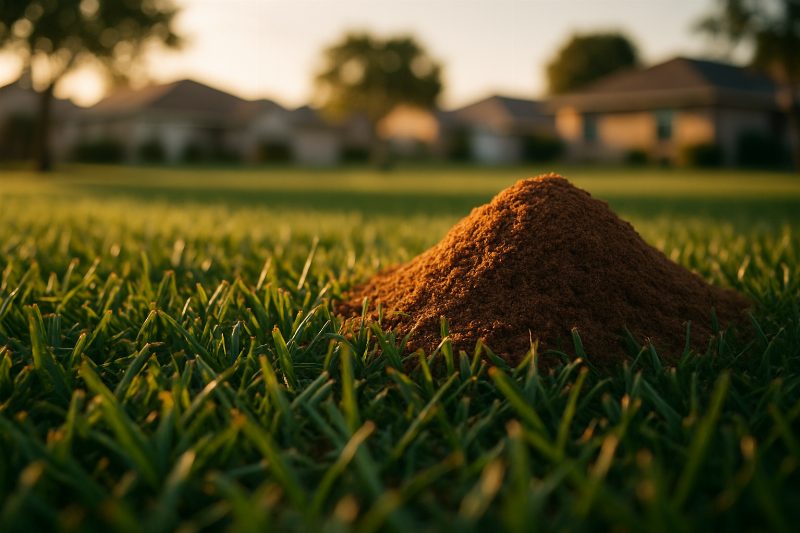
Fire ants do not knock before they arrive, and in Manatee County they rarely leave on their own. If you have stepped into a mound barefoot, you already understand why controlling these insects feels urgent. What most homeowners do not realize, though, is that the wrong treatment approach can scorch, thin, or even kill the very grass you are trying to protect. The good news is that safe, effective fire ant control is absolutely achievable without collateral damage to your lawn.
Why Fire Ants Are Such a Problem Here
Florida's warm, sandy soil is practically a paradise for red imported fire ants (Solenopsis invicta). Manatee County sits right in the heart of the ant's preferred climate range. The combination of heat, humidity, and the rain patterns we see from spring through fall creates near-perfect colony-building conditions across Bradenton, Parrish, Ellenton, and Lakewood Ranch neighborhoods alike.
A single mature fire ant colony can contain anywhere from 100,000 to 500,000 workers. Queens, of which a colony may have more than one, can live for several years. That longevity is the key reason that simply pouring boiling water on a mound or drowning it with dish soap rarely solves the problem for good. You may disrupt the visible mound while the colony relocates ten feet away and starts over.
Beyond the painful sting (which is actually a venom injection, not a bite), fire ants cause real turf damage. Their mounds smother and kill grass underneath, create uneven ground that is hard on bare feet and mower blades alike, and can damage irrigation heads when colonies build near them. In pasture-adjacent communities like Parrish and Ellenton, large mound populations can cover surprising stretches of yard within a single season.
The Two-Step Method: Why It Works
University of Florida Extension has long recommended what it calls the "Two-Step Method" for fire ant control, and for good reason. It combines a broadcast bait treatment with targeted individual mound treatments. Together, they address both the immediate mounds you can see and the scattered colonies that have not yet pushed up visible soil.
Step 1: Broadcast Bait
Bait products are formulated to look and smell like food to foraging ants. Worker ants carry bait granules back into the mound and share them with the colony, including the queens. Because the active ingredient reaches the queen, the colony collapses rather than just dispersing.
Broadcast bait should be spread across the entire lawn, not just around visible mounds. This is where many homeowners go wrong. Spot-treating only what you can see leaves dozens of developing colonies untouched.
A few important rules for bait to work correctly:
- Apply when ants are actively foraging, typically when soil temperatures are between 70 and 90 degrees Fahrenheit. Early morning or late afternoon on warm days is ideal.
- Use fresh bait. Fire ant bait has a shelf life, and rancid oil in old bait is less attractive to ants. If the bag has been sitting in a hot garage for a season, buy a new one.
- Do not apply bait before rain or irrigate within 24 to 48 hours after application. Wet bait loses its attractiveness quickly.
- Use a hand-crank spreader or a push spreader set to a fine opening to get even coverage.
Common active ingredients in baits include hydramethylnon, spinosad, and indoxacarb. Spinosad-based baits are derived from naturally occurring soil bacteria and are among the lower-risk options for lawns, beneficial insects, and pets once dry.
Step 2: Individual Mound Treatments
Mound treatments work faster than baits and are used to knock down large, established colonies quickly. Products come as drenches (liquid poured directly into the mound), granules applied directly to the mound and then watered in, or contact dust treatments.
For lawn safety, the key is to choose products labeled for use on the grass type you have. The majority of Manatee County lawns are planted in St. Augustine or its popular cultivar Floratam. Always read the label: if a product says it is not for use on St. Augustine grass, believe it. Some granular fire ant products contain active ingredients that, at higher concentrations or with excessive watering, can cause yellowing or thinning in St. Augustine.
Bifenthrin and acephate are among the most widely used mound-treatment actives. Bifenthrin, sold under several brand names, has a good lawn-safety profile when used at label rates. Acephate drenches work quickly but should not be used near water features, which is something worth noting for the many Bradenton and Lakewood Ranch homes on ponds or retention areas.
What to Avoid: Common Mistakes That Hurt Your Grass
Homeowners who want fast results sometimes reach for harsh, non-selective products. Gasoline poured into a mound is unfortunately still a technique people try. Beyond being a serious fire hazard and illegal in many jurisdictions, it kills the grass for several feet in every direction and contaminates soil. Bleach and ammonia create the same dead zone problem.
Over-treating a mound with granular insecticide, then watering heavily, can push concentrated active ingredient into the surrounding grass roots. Follow label directions on water-in amounts. More is not better.
Club soda and orange oil are popular "natural" remedies that circulate on social media every summer. Neither has demonstrated consistent effectiveness against fire ant colonies in peer-reviewed research, and repeated applications of acidic or surfactant-heavy solutions can affect your soil pH and turf health over time.
Physical disruption alone, such as kicking or shoveling a mound, simply moves the ants temporarily. The colony survives underground and rebuilds within days.
Timing Treatments to the Florida Season
Fire ants are active year-round in our climate, but their behavior shifts with the season, and so should your control strategy.
Spring (March through May): Colonies are expanding fast. This is the best time for broadcast bait applications before populations peak. Ants are foraging aggressively, so bait uptake is excellent.
Summer (June through August): Heavy rainfall means ants move constantly. After each significant rain event, mounds often relocate or new ones appear seemingly overnight. Summer is also when lawns are most lush and most susceptible to stress from insecticide misuse. Keep treatments targeted. Note that summer is also when other turf problems peak alongside fire ants, so it is worth knowing how to distinguish pest damage from fungal issues. Our post on gray leaf spot, the summer fungus that loves St. Augustine grass, is a useful companion read.
Fall (September through November): Colony activity begins to concentrate as temperatures cool. A broadcast bait treatment in October is one of the most effective single treatments of the year because ants are still foraging but not yet slowing for winter.
Winter (December through February): Ants go deeper into the soil and mound activity drops. This is not the time for bait, since foraging slows and the ants simply will not pick it up reliably.
Protecting Beneficial Insects While You Treat
Fire ant control that wipes out every other insect in your yard is not a win. Pollinators, ground beetles, and other beneficial insects live in and around healthy Florida lawns. A few practices help protect them:
- Apply bait products in the evening when bees are not foraging.
- Avoid broadcast spraying liquid insecticides across flowering weeds or ornamentals at the lawn edge.
- Use targeted mound treatments rather than blanket liquid applications whenever possible.
- Choose spinosad-based or indoxacarb-based baits, which have relatively narrow target spectra compared to broad-spectrum contact insecticides.
Fire Ants Near Water: A Special Consideration
Many homes in our area, particularly in Lakewood Ranch, Parrish, and along the waterways near Palmetto and Ellenton, have ponds, drainage ditches, or retention areas directly adjacent to the lawn. Fire ants are drawn to moist soil near water edges.
This is where product selection becomes especially important. Several common insecticides carry label restrictions against use within a certain distance of water bodies. Pyrethroid-based products, including bifenthrin, are toxic to aquatic invertebrates and fish at very low concentrations. If your mound is within 10 to 15 feet of a water body, use only products that are specifically labeled safe for waterfront application. Granular baits at label broadcast rates are generally among the lower-risk options in these situations.
When in doubt, this is exactly the kind of situation where having a licensed pest control professional or a lawn care team familiar with local conditions handle the application makes a genuine difference. You can learn more about how we approach property-specific pest and lawn issues on our lawn care and landscaping services page.
How Fire Ants Interact With Other Lawn Problems
Fire ant damage is sometimes misread as something else entirely, and vice versa. Dead patches around mounds can look like fungal disease, drought stress, or chinch bug injury to the untrained eye. If your lawn has irregularly shaped dead patches that do not have visible mounds nearby, it is worth investigating other causes before assuming ants are the culprit.
Chinch bugs, for example, produce damage patterns that overlap with fire ant stress, particularly along lawn edges and in sunny, dry sections. Our post on chinch bugs versus drought stress in St. Augustine grass walks through how to tell them apart.
Similarly, bare patches that refuse to fill back in even after fire ant colonies are eliminated may be dealing with a root-level fungal issue. Take-all root rot is a common culprit in Florida lawns, and it often goes undiagnosed because it looks so much like simple stress damage from above the surface.
Long-Term Prevention: Keeping Colonies from Returning
Eliminating the ants you have today is only half the job. Fire ant pressure in Manatee County is persistent because colonies migrate from neighboring properties, common areas, and undeveloped land continuously. A maintenance approach works far better than emergency response.
Practical prevention habits:
- Schedule one or two broadcast bait applications per year, ideally in spring and fall, as a standing routine.
- Mow at the right height for your grass type. Taller St. Augustine grass shades the soil surface and makes it slightly less hospitable to ant foraging activity. Scalped lawns create bare, warm soil that ants prefer.
- Avoid over-irrigating. Consistently waterlogged soil attracts ants seeking moisture. Irrigation systems that run too frequently create the warm, damp conditions fire ants love. Check your system seasonally.
- Address mounds promptly when they appear. Small, young colonies are easier to eliminate than established ones with multiple queens.
- Keep an eye on lawn edges. Mounds often start along sidewalks, driveways, and fence lines where soil is disturbed. Catching them early there means less spread into the turf.
If you are managing a larger property or dealing with recurring heavy infestations despite treatment, a regular scheduled program with a professional is often more cost-effective than repeated emergency product purchases. Our team works with homeowners across Bradenton, Lakewood Ranch, Parrish, Palmetto, Ellenton, and Anna Maria Island to build maintenance plans that fit the property and the season.
When to Call a Professional
Some situations genuinely call for professional help:
- Infestations covering large sections of the yard with dozens of active mounds
- Mounds repeatedly returning within a few weeks of treatment
- Colonies located near structures, including AC units, irrigation valve boxes, or utility equipment
- Proximity to water bodies where product selection requires a licensed applicator
- Households with children, elderly residents, or pets with known hypersensitivity to insect venom
You can reach out to us through our contact page to describe what you're dealing with. We're happy to take a look and give you an honest assessment of what the situation calls for. No pressure, just a straight answer from people who treat Manatee County lawns every week.
Fire ant control does not have to be a frustrating cycle of mound-kicking and guesswork. With the right products, applied at the right time and in the right way, you can keep your lawn both ant-free and genuinely healthy through every season.