
Pet urine spots on the lawn: how to prevent and repair them
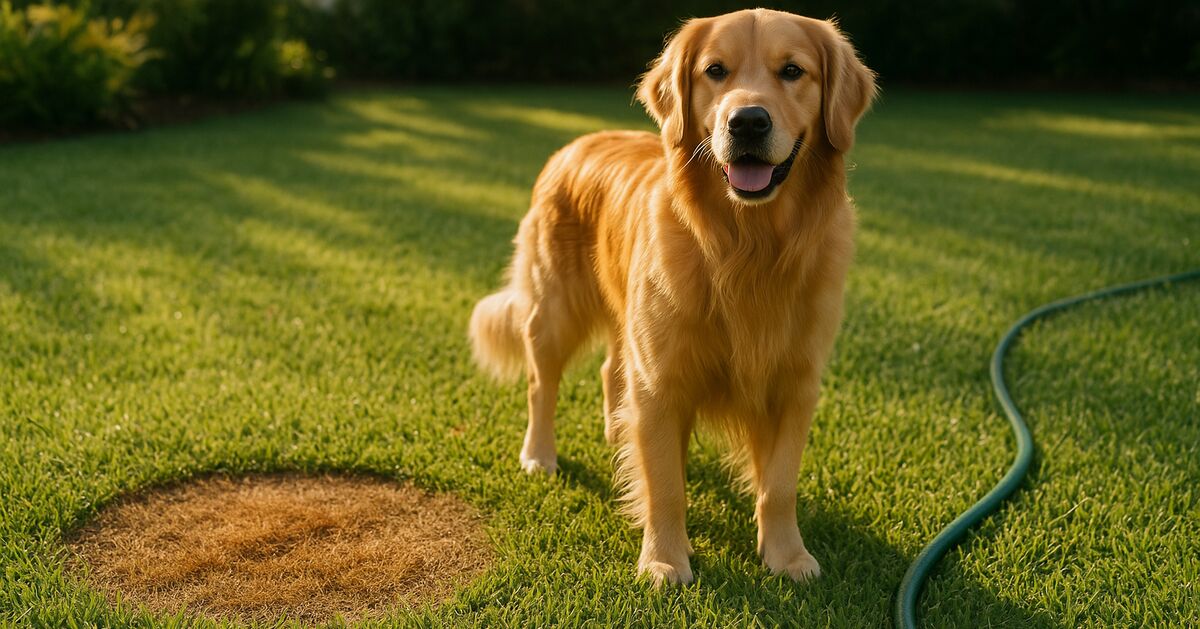
Your lawn can handle a lot of abuse from the Florida sun, salty air, and summer downpours, but a dog with a favorite corner of the yard will win every time. Pet urine spots are one of the most common lawn complaints we hear from homeowners across Bradenton, Parrish, and Lakewood Ranch, and they are also one of the most misunderstood. Most people assume the problem is acidity, so they reach for lime. That is almost never the right fix. Understanding what is actually happening in the soil is the first step to solving it for good.
Why dog urine kills grass
The real culprit is nitrogen, not acid. Dog urine contains urea, a nitrogen compound that breaks down quickly in the soil. A little nitrogen is actually good for grass. Your fertilizer contains it. The problem is concentration. When a dog urinates repeatedly in the same spot, the soil receives a sudden, intense spike of nitrogen that overwhelms the turf's roots. Think of it like fertilizer burn: too much of a good thing, delivered all at once, causes the grass blades to dry out, yellow, and die.
You will usually notice the damage in a very recognizable pattern. The center of the spot turns brown and dies, while the outer ring often looks darker green and grows faster than the surrounding turf. That lush green ring is getting just enough diluted nitrogen to act as a fertilizer boost. The dead center got far too much.
Female dogs tend to cause more visible damage than males because they squat and release the full volume of urine in a single concentrated spot. Male dogs that leg-lift spread the urine over a wider area and often onto vertical surfaces instead of flat turf. However, any dog that returns to the same patch of grass repeatedly will eventually burn it out.
St. Augustine grass, which covers the majority of lawns in Manatee County and along the coast, is moderately sensitive to urine burn. Bahia, common in Parrish and rural parts of the county, tends to be a little more forgiving, but it is not immune. No Florida grass variety is fully resistant, especially during the heat of summer when the turf is already under stress and the nitrogen concentrates faster as water evaporates quickly from the soil surface.
The lime myth (and why it does not work)
Walk into almost any garden center and you will find someone suggesting lime as the cure for urine spots. The idea is that dog urine is acidic, so lime will neutralize it and restore the soil. The problem: fresh dog urine is actually closer to neutral or even slightly alkaline, depending on the dog's diet and health. Mature, decomposed urine can become more alkaline over time. Florida soils are already on the alkaline side in many neighborhoods near the coast. Adding lime to an already alkaline spot can make things worse, not better.
Save the lime for situations where a proper soil test confirms your pH is genuinely too low. If you are curious about your soil health, that is a great conversation to have with a lawn care professional who knows local conditions.
Prevention: the strategies that actually make a difference
Preventing urine spots is mostly about dilution and behavior management. There is no magic spray or tablet that makes the problem disappear, but these approaches genuinely reduce damage.
Water the spot immediately. This is the single most effective prevention step. Within eight hours of your dog urinating on the lawn, water that area thoroughly. The goal is to flush the nitrogen deeper into the soil and dilute it before it reaches a damaging concentration at the root zone. Keep a hose nearby or make sure your irrigation covers the areas your dog uses most. Homeowners who do this consistently see dramatically less burn, even with large dogs.
Designate a relief area. Train your dog to use a specific spot that is either mulched, covered with gravel, or planted with a tough ground cover that can take the abuse. Mulched areas work especially well because you can simply replenish them when they break down. This takes patience, but it is worth the effort if your dog has a strong preference for one area of the lawn.
Increase your dog's water intake. More water in means more diluted urine out. Keep fresh water available at all times, consider adding a water fountain that encourages drinking, and talk to your vet about whether your dog's diet could be affecting urine concentration.
Avoid urine-neutralizer supplements without vet guidance. There are pet supplements marketed to reduce lawn burn by changing urine chemistry. Some work by altering pH, which may not be appropriate for every dog. Always check with your veterinarian before adding supplements to your pet's diet.
Keep your lawn healthy overall. A dense, well-maintained lawn is far more resilient than a thin or stressed one. Proper mowing height, good irrigation coverage, and timely fertilization give the turf a fighting chance to recover from occasional urine exposure on its own. You can read more about keeping your grass in top shape on our lawn care and landscaping services page.
Repairing existing urine spots
If the damage is already done, here is how to bring those spots back.
Step 1: Confirm it is actually urine damage
Urine spots look similar to some fungal diseases and even drought stress. The giveaway with urine damage is the pattern: a distinct dead center with a darker green halo around the edge. Fungal problems like gray leaf spot or take-all root rot tend to have irregular shapes or other visible symptoms on the blades themselves. If you are not sure what you are looking at, get a second opinion before you start treating, because the repair steps differ.
Step 2: Flush the soil
Before doing anything else, soak the affected area deeply, several times over the course of a day or two. You want to push that concentrated nitrogen down and away from the root zone. Use a slow, deep watering rather than a quick spray so the water actually penetrates rather than running off the surface.
Step 3: Remove dead material
Once the soil is thoroughly flushed, rake out the dead grass blades and thatch. You want to expose the soil so that new growth can get light and air. If the dead patch is small, just clearing it out and keeping the area moist may be enough for the surrounding St. Augustine stolons to creep in and fill the gap on their own. St. Augustine spreads horizontally through runners called stolons, so small spots, say three to four inches across, often repair themselves within a few weeks during the growing season.
Step 4: Plug or sod larger spots
For patches larger than about four to six inches, waiting for natural spread can take too long, especially during the drier, slower-growing months. Your best option is to cut a few plugs from a less visible part of the lawn or purchase sod from a local supplier, cut it to fit, and press it firmly into the prepared soil. Water it in well and keep it consistently moist for the first two to three weeks. If you have recently dealt with new sod in another part of the yard, the same care principles apply here. Our post on new sod turning brown in the first three weeks covers exactly what to watch for during that establishment window.
Step 5: Adjust your watering schedule
After you repair the spot, make sure your irrigation is actually reaching that area. One of the most common reasons urine damage is so severe in some yards is that the irrigation system has a gap in coverage right where the dog tends to go. A well-aimed sprinkler head or a quick manual soak after each visit from your dog makes a substantial difference. If you suspect your irrigation coverage has gaps, our FAQ page has information on what to look for.
Step 6: Hold off on fertilizing the repaired area
The soil in a recently burned spot already has an excess of nitrogen. Adding more fertilizer too soon will set back the repair. Wait until you see healthy new growth established before returning that spot to your regular fertilization schedule.
Florida-specific considerations
The climate here adds a layer of complexity that homeowners in cooler states do not face. Our summer heat accelerates the breakdown of urea and speeds up evaporation, which concentrates the nitrogen in the upper layer of soil faster. That means the window between "the dog just went there" and "visible burn is starting" is shorter in July in Bradenton than it would be in October.
Conversely, during the drier winter and early spring months, the soil stays drier and the natural dilution from rainfall is reduced. Spots that might have rinsed away harmlessly in August can linger and worsen in February without supplemental watering. If you are managing your lawn through the cooler months, make sure pet areas get extra manual watering even when rainfall is light.
Salt air is another factor for homeowners on Anna Maria Island and along the coastal edges of Palmetto and Bradenton. Salt-stressed turf is already working harder to maintain cell moisture, so it has less reserve capacity to buffer a nitrogen spike. If your lawn is near the coast, be extra diligent about flushing urine spots quickly.
What about lawn-safe areas for pets?
Some homeowners in Lakewood Ranch and Parrish choose to carve out a small dedicated relief zone using materials that handle urine without dying. Pea gravel is a popular choice because it drains well, is easy to hose down, and dogs often take to it readily with some training. Artificial turf is another option in a small, designated area, though it requires regular rinsing to prevent odor. Decomposed granite and cedar mulch are also used, though mulch will need refreshing more often. If you go this route, a clean edge between the zone and the living lawn keeps things tidy and signals to the dog where the boundary is.
When to call in a professional
If your lawn has multiple large dead patches and you are not sure whether you are dealing with urine burn, a disease, an irrigation problem, or something else entirely, it is worth having someone take a look. Misidentifying the cause means applying the wrong fix and potentially making things worse. Our team works with homeowners across Bradenton, Lakewood Ranch, Ellenton, and surrounding communities to diagnose exactly what is going on before recommending a repair plan. You can reach us through our contact page to set up a time to walk the yard together.
The short version
Dog urine burns grass because of nitrogen overload, not acidity. The best prevention is immediate, thorough watering of any spot your dog uses. Small damaged areas often self-repair if the soil is flushed and the turf is healthy. Larger spots need plugging or sodding. Keep your dog hydrated, consider a designated relief area, and stay on top of irrigation coverage. With a consistent routine, you can have both a happy dog and a healthy lawn.