
Should you overseed with ryegrass for a green winter lawn?
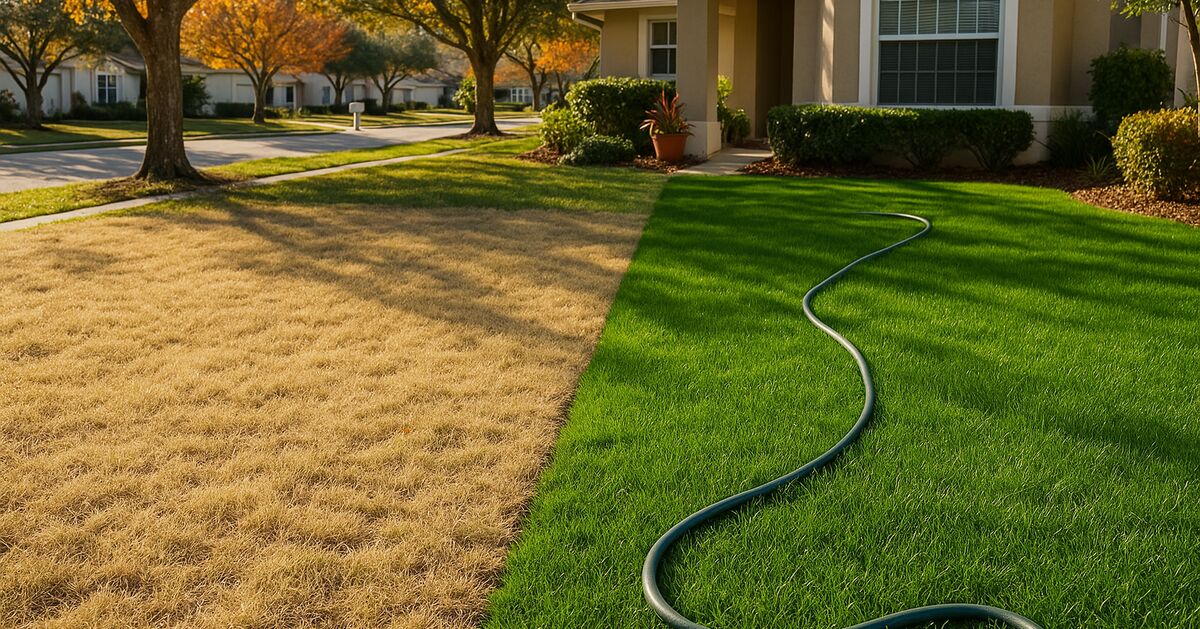
Every November, a question starts making the rounds in neighborhoods from Parrish to Anna Maria Island: should I throw down some ryegrass seed to keep my lawn green this winter? The idea is appealing. Your St. Augustine or Bahia goes dormant or at least pale, the snowbirds arrive, and you want the yard to look sharp. Ryegrass is cheap, it germinates fast, and it is genuinely green. But the tradeoffs are real, and for many Florida homeowners, the short-term color is not worth the long-term cost. Let's walk through all of it so you can make the call that fits your lawn and your situation.
Why warm-season lawns go thin and pale in winter
First, a quick grounding in what is actually happening to your lawn when the weather cools. The grasses that thrive in Southwest Florida, primarily St. Augustine, Bahia, and Zoysia, are warm-season grasses. Their growth slows dramatically once soil temperatures drop below roughly 60 degrees Fahrenheit, which happens here from about mid-November through February. The grass does not die; it goes semi-dormant. Leaf blades may lose some color, growth nearly stops, and the lawn can look thin or straw-colored in spots.
This is completely normal. It is not disease, it is not a watering problem, and it does not mean your lawn needs replacing. If you want the full picture of keeping your warm-season turf healthy during the cool months, our post on winter lawn care and St. Augustine grass covers that in depth. The dormancy phase is actually part of a healthy annual cycle. The lawn is resting, storing energy in its roots, and preparing for vigorous spring growth.
But for homeowners who want green, the appeal of overseeding with annual ryegrass (or perennial ryegrass, more on that below) is understandable. So let's look at it honestly.
What overseeding with ryegrass actually means
Overseeding is the practice of broadcasting cool-season grass seed over your existing warm-season lawn in fall, typically October or early November here in Manatee County and the surrounding area. The ryegrass germinates in the cooler weather, fills in the thin-looking turf, and delivers green color through winter. When spring arrives and temperatures climb, the ryegrass dies off naturally as it cannot tolerate Florida's heat and humidity, and your warm-season grass wakes back up.
There are two types you'll see at local garden centers:
- Annual ryegrass (Lolium multiflorum): Cheaper, coarser-textured, germinates very quickly (sometimes 5 to 7 days). Dies out reliably in spring. Often used on athletic fields and roadsides.
- Perennial ryegrass (Lolium perenne): Finer-textured, darker green, a bit more expensive. Despite the name, it also dies out in Florida's summer heat; it just sometimes lingers a little longer into spring than annual ryegrass does.
For most residential lawns in Bradenton, Lakewood Ranch, or Ellenton, annual ryegrass is what people use because of cost and availability. Perennial ryegrass is sometimes chosen for higher-visibility properties where turf quality matters more.
The real benefits of overseeding
Let's give credit where it is due. There are genuine reasons people do this:
- Curb appeal through winter. If you have a rental property, you are selling your home, or you simply take pride in how your yard looks year-round, a green lawn in January does make a difference.
- Erosion control. On slopes or bare patches, ryegrass can hold soil in place during winter rain events.
- Relatively low cost. A bag of annual ryegrass seed is inexpensive, and if you do the seeding yourself, the upfront cost is low.
- Fast results. Few things in lawn care germinate as quickly. You can see green fuzz in under a week in ideal conditions.
These are legitimate benefits. But every one of them comes with a caveat.
The tradeoffs you need to understand before you seed
1. Competition stress on your warm-season grass
This is the biggest one, and it does not get talked about enough. Ryegrass is a vigorous, competitive plant. When you overseed it into your St. Augustine or Bahia, you are not just adding grass on top; you are introducing a competitor that will fight your existing turf for water, nutrients, light, and root space. During the winter, your warm-season grass is dormant, so the competition is manageable. The problem is spring.
As temperatures warm up and your St. Augustine tries to come out of dormancy and resume growth, the ryegrass is still there, still competing, still drawing resources. Your warm-season grass has to push through or around an established stand of ryegrass to green up and spread. This transition period, typically March through May in our area, is when overseeded lawns often look patchy, uneven, and stressed. The ryegrass is dying but not gone yet. The St. Augustine is struggling to reclaim territory. The result is often a messy-looking lawn for six to eight weeks right when you want it to look its best heading into summer.
2. Scalping requirement
To give ryegrass seed good soil contact when you overseed, you need to mow your existing lawn very short (scalping it) and ideally dethatch or verticut before seeding. Scalping a warm-season lawn in fall is stressful for the grass. It removes a lot of leaf tissue right before the plant is entering dormancy. Done incorrectly or too aggressively, it can thin the lawn going into spring and set you up for weed pressure when the turf is slow to fill back in. Our guide on why scalping hurts your lawn gets into how close is too close when you mow.
3. Watering demands during germination
Newly seeded ryegrass needs to stay consistently moist to germinate and establish. In practice, that often means irrigating two to three times per day for the first one to two weeks, then scaling back as the seedlings root in. This is a significant water commitment. It also runs counter to the general guidance for established warm-season lawns in the cooler months, which need much less frequent irrigation. Manatee County has watering restrictions in place year-round, so you'll want to verify your schedule is compliant.
4. Fungal disease risk in spring
The overlap period in spring, when ryegrass is dying and warm-season grass is trying to wake up, creates conditions that favor fungal disease. Decaying ryegrass creates moisture and organic matter at the soil surface. Combined with warm temperatures and Florida's humidity, this can set the stage for issues like Take-All Root Rot or Gray Leaf Spot. These are stressful problems that can cause bare patches and require treatment to resolve.
5. Fertilizer timing complications
Ryegrass is a different plant with different nutritional needs than your warm-season turf. If you fertilize to keep the ryegrass looking good in winter, you risk pushing too much nitrogen into your system at a time when your underlying warm-season grass does not need it. And if you wait until spring to fertilize for your St. Augustine's benefit, you may inadvertently extend the life of the ryegrass and drag out that messy transition period.
6. It may not even germinate well
Ryegrass needs soil temperatures below about 65 to 70 degrees Fahrenheit to germinate reliably. In Manatee County, those temperatures often do not arrive until late October or even November. Seeding too early, which many homeowners do because they are eager, means poor germination, wasted seed, and potential for that seed to rot in warm, moist soil before conditions improve.
Who should consider overseeding and who should skip it
Consider overseeding if:
- You have a Bahia lawn. Bahia goes fully tan and dormant in winter and does not have St. Augustine's dense, spreading growth habit that makes spring transition so difficult. Overseeding Bahia is generally less disruptive.
- You have a high-visibility property, like a short-term rental or a home actively listed for sale, and curb appeal is a direct financial concern.
- You are comfortable with the extra maintenance involved: the scalping, the frequent watering during establishment, the careful spring management.
Skip overseeding if:
- You have St. Augustine grass. The spring transition stress on St. Augustine is real, and a healthy, well-maintained St. Augustine lawn will green up beautifully on its own once warmth returns.
- Your lawn already has thin spots, disease history, or drainage issues. Adding ryegrass competition on top of a stressed lawn is a recipe for a worse problem in spring. (If you are already dealing with bare patches, our post on whether to replace or nurse your lawn back may be more relevant.)
- You are not prepared for the watering and mowing commitment through the winter months.
- Your lawn slopes toward a neighbor's property or a waterway. Extra irrigation during ryegrass establishment can run off and carry nutrients with it.
What to do instead for a better-looking winter lawn
If you decide overseeding is not worth it for your situation, there are things you can do to make your warm-season lawn look as good as possible through the cooler months:
- Mow at the correct height. Do not scalp in fall. Keeping St. Augustine at 3.5 to 4 inches going into winter actually helps the leaf blades retain color and insulate the crown.
- Do not over-irrigate. Dormant warm-season grass needs much less water. Over-watering in winter encourages weeds and fungal problems without benefiting the turf.
- Avoid late-season nitrogen fertilization. A late application of nitrogen pushes soft new growth that is susceptible to any cold snaps we get, even mild ones.
- Address weeds proactively. Winter is prime time for cool-season weeds like annual bluegrass (Poa annua) and various broadleafs to move in. A pre-emergent application in early fall can help.
- Keep up with pest monitoring. Some pests like mole crickets remain active into fall and can do damage to root systems while your turf is stressed.
A well-maintained warm-season lawn, even at its palest, looks far better than one that spent the winter fighting off ryegrass competition and came out of spring patchy and slow to recover.
Local context: our area's mild winters matter
One thing worth noting for homeowners along the Suncoast: our winters are genuinely mild compared to most of the state. Bradenton and Anna Maria Island rarely see hard freezes. Our warm-season grasses often hold color better here than they would in Central Florida. If you are coming from a colder climate and expecting your lawn to look dead all winter, you may be pleasantly surprised. A healthy, properly maintained St. Augustine lawn in Lakewood Ranch or Palmetto often looks acceptable through winter without any intervention at all.
That mild climate also means ryegrass tends to linger longer into spring here than it would farther north, because we warm up gradually. That extended transition period can be more stressful for your underlying turf than a quicker spring green-up elsewhere.
The bottom line
Overseeding with ryegrass is not a bad practice, and it is not dangerous if done correctly. It is simply a tradeoff. You get green color in winter and you accept more maintenance, more water use, and some stress on your warm-season grass through the spring transition. For most homeowners with St. Augustine lawns in Manatee County, the tradeoff is not worth it. For Bahia lawns and high-visibility properties, it may well be.
If you are unsure what makes sense for your specific lawn, our team is happy to take a look. We provide lawn care and landscaping services across Bradenton, Parrish, Ellenton, Anna Maria Island, and the surrounding communities. You can always reach out to us directly with questions about your lawn's condition and what winter strategy fits your situation best.
The greenest lawn is not always the one that was pushed to be green all year. Sometimes the best thing you can do is let the grass rest.