
When and How Often to Trim Palm Trees in Florida
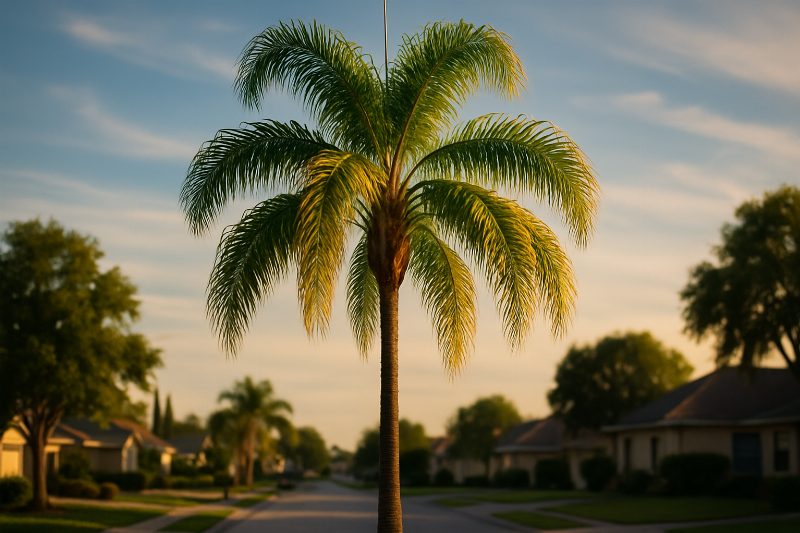
Most homeowners trim their palms whenever the fronds start looking raggedy, which turns out to be exactly the wrong approach. Palm trimming in Florida follows its own logic, one that is rooted in the biology of the tree rather than in what looks tidy on a given Saturday morning. Get the timing right and your palms stay healthy, hurricane-resistant, and genuinely beautiful for decades. Get it wrong and you can permanently stunt the tree, invite disease, or spend money fixing problems that should never have started.
This guide covers when to trim, how often, what to cut and what to leave alone, the tools and safety considerations involved, and the local quirks that make palm care in Manatee County, Sarasota County, and along the Gulf Coast a little different from what you might read in a generic gardening article.
Why Palms Are Not Like Other Trees
A palm is technically a monocot, meaning its internal structure is nothing like an oak or a live oak. It does not form new growth rings or build layered wood. All of its vascular tissue runs in bundles throughout the trunk, with no cambium layer to seal wounds. That matters for pruning because every cut on a palm is a permanent wound the tree cannot truly close over.
The growing point of a palm, called the terminal bud or heart, sits at the very top of the trunk. If that bud is damaged or killed, the palm dies. There is no backup bud, no lateral branching, no recovery. That single point of vulnerability is why aggressive or careless trimming carries real risk.
Fronds, even yellowing ones, continue to move nutrients and moisture back into the trunk until they are fully dead and brown. Cutting a frond before it has completely died forces the palm to abandon those stored resources rather than reclaim them. Over time, repeated premature trimming leads to something called nutrient deficiency cycling, where the palm never quite catches up on potassium, magnesium, and manganese, which are the minerals it is already struggling to get enough of in Florida's sandy soils.
The Hurricane Cut Myth
You will hear the phrase "hurricane cut" used to describe palms trimmed so severely that only a small green tuft remains at the top. It sounds like storm preparation logic: fewer fronds, less wind resistance, less chance of the tree toppling. The reality is the opposite.
A hurricane cut starves the palm of photosynthetic capacity at exactly the moment it needs energy reserves to respond to storm stress. It exposes the terminal bud to direct sun, heat, and physical damage. And research from the University of Florida's Institute of Food and Agricultural Sciences has consistently found that over-pruned palms are more susceptible to lethal yellowing, Ganoderma butt rot, and a range of fungal pathogens that enter through fresh cuts made too high on the trunk.
The fronds that point upward and outward in a natural canopy actually help the tree shed wind load by flexing together. A full, healthy canopy on a structurally sound palm handles Florida storms far better than a scalped one.
If you have questions about what storm-season preparation actually looks like for your specific palms, the frequently asked questions section of our site covers this and other common concerns.
When to Trim: Season Matters
The best time to trim palms in Florida is late spring, typically May into early June, just before the rainy season and hurricane season arrive simultaneously. Here is the reasoning:
- Trimming in late spring removes dead and dying fronds before the summer wet season, which reduces humidity-trapping debris around the crown and lowers the risk of fungal issues during the long, soggy months ahead.
- It leaves the palm with a full, healthy canopy heading into summer, giving it maximum photosynthetic capacity during the fastest-growing period of the year.
- Fresh cuts made in late spring have weeks of warm, relatively dry weather to stabilize before heavy rain arrives consistently.
- You avoid trimming during peak nesting season for many cavity-nesting birds, which often shelter in palm crowns from roughly February through April.
What about fall? A second light trim in October or November is sometimes appropriate if dead fronds have accumulated heavily. Keep it conservative: remove only fully brown, drooping fronds. Do not cut into green material or fronds that still show any green color.
What to avoid:
- Winter trimming slows the palm's recovery because growth is minimal. Cuts stay fresh and vulnerable longer.
- Summer trimming during active storm threats is risky for the crew and stresses a palm that is already responding to heat and rain pressure.
- Trimming during any active disease outbreak in the neighborhood. If lethal bronzing or fusarium wilt has been confirmed nearby, wait and consult a certified arborist before opening any wounds on your palms.
How Often Is Often Enough?
For most Florida palms, once a year is the right frequency. Some species, particularly slow-growing ones like the Bismarck palm or the European fan palm, may only need trimming every 18 to 24 months. High-producing species like the queen palm can drop fronds more quickly and may benefit from two careful trims per year if you are managing them in a landscape setting.
The test is simple: if the lowest ring of fronds is fully brown and dry, it is time to trim. If you are cutting anything that still has green in it, you are trimming too early.
A practical rule used by experienced crews in Bradenton and Lakewood Ranch is the "nine o'clock, three o'clock" guideline. Imagine a clock face overlaid on the palm canopy. Healthy trimming removes only fronds that hang below the nine o'clock position on the left and the three o'clock position on the right, meaning nothing above the horizontal plane of the trunk top should be touched unless it is dead, broken, or poses a clear hazard.
If you are working with a professional crew on your Bradenton lawn care and landscaping or your Lakewood Ranch property, this is a useful shorthand to share when walking the property together before work begins.
What to Cut, and What to Leave Alone
Remove:
- Fully brown, dry fronds that hang below horizontal
- Broken or cracked fronds that dangle, which can fall and injure people or damage property
- Fruit stalks and seed pods, particularly on queen palms and date palms, where the fruit volume can be significant and create a mess or attract wildlife
- Old flower stalks that have dried out completely
Leave alone:
- Any frond that still shows green, even if it is mostly yellow
- Fronds that grow upward or horizontally, even if they look a little ragged
- The "boots" or old frond bases on certain palms like Washingtonias, which provide natural insulation to the trunk and can be left until they shed naturally
Never cut:
- Into the crown shaft (the smooth, often greenish or yellowish column of tightly wrapped frond bases just below the canopy on self-cleaning palms like royal palms)
- Any material near the terminal bud
- Green fronds to achieve a "neater" look
Tools, Safety, and Why This Work Carries Real Risk
Trimming a mature palm is not a ladder-and-loppers job. A fully hydrated queen palm frond can weigh 15 to 25 pounds. A cluster of date palm fruit can weigh over 100 pounds. Falls from palms are among the more common serious injuries in the landscape industry, and the cuts required often involve chainsaws or large pruning saws at significant heights.
For small ornamental palms with fronds reachable from the ground or a low step stool, a sharp pair of bypass loppers or a pruning saw works well. Cut each frond close to the trunk but leave the frond base intact; do not gouge or shave the trunk. Disinfect your blades between trees using a diluted bleach solution or isopropyl alcohol, particularly if you are moving between palms in areas where fusarium wilt has been observed. That disease is spread directly on cutting tools.
For anything that requires climbing or a lift, hire a crew with proper equipment and insurance. The cost of professional trimming is a fraction of what an emergency room visit or property damage claim can run, and a skilled crew can assess the overall health of the tree at the same time.
Our team provides palm trimming as part of our full lawn care and landscaping services across Manatee County, so if you are in Parrish, Ellenton, Palmetto, or out on Anna Maria Island, you are in our service area.
Palms and the Bigger Lawn Picture
Palm health does not exist in isolation. A palm sitting in compacted, nutrient-poor soil will show stress in its fronds long before a structural problem becomes obvious. The yellow-orange coloring that many homeowners misread as "time to trim" is often a potassium or magnesium deficiency that trimming will make worse, not better.
If your palms are consistently producing pale or discolored new growth, consider a palm-specific fertilizer with controlled-release potassium and magnesium before you pick up the saw. Florida's sandy soils drain nutrients quickly, and palms need a targeted feeding program, not a generic turf fertilizer.
It is also worth noting that stressed palms are more attractive to pests. Palmetto weevils, for instance, target palms that are already weakened by poor nutrition, over-trimming, or drought. If you are seeing odd holes or frass at the crown base, get a professional assessment quickly. Similarly, the fungal diseases that affect grass and trees in this region often share the same conditions: humidity, poor drainage, and stressed plant tissue. We have written about related issues in depth, including take-all root rot bare patches in lawns and gray leaf spot on St. Augustine grass during summer, and many of the underlying principles about plant stress apply to ornamental trees as well.
Local Notes for Manatee County and the Gulf Coast
Palms in communities like Parrish and Ellenton that sit further inland tend to experience slightly cooler winter temperatures and occasionally brief freezes that can damage the newest emerging frond. If you see a brown or discolored spear (the tightly rolled emerging frond at the center of the canopy) after a cold snap, do not pull it out prematurely. Wait several weeks to see if it unfurls. If it does not and begins to smell, then removal is appropriate, ideally by a professional who can assess whether the terminal bud itself was damaged.
On Anna Maria Island and in lower-lying coastal areas of Palmetto and Bradenton, salt spray and wind are additional stressors. Palms in these settings often show tip burn on fronds from salt accumulation. This is not a disease and does not mean you should remove the frond early. Rinsing fronds with fresh water during dry periods and ensuring good soil drainage can help significantly.
For properties across all of our service areas in Manatee County and beyond, our crews are familiar with the microclimates, soil types, and pest pressures that vary from neighborhood to neighborhood and island to coastline.
Putting It All Together
The simplest summary of palm trimming in Florida looks like this:
- Trim once a year, in late spring before rainy season
- Remove only fully dead or broken fronds and old fruit stalks
- Never cut green material or trim above horizontal
- Disinfect your tools between trees
- Hire a professional for anything requiring height or involving a saw
- Feed your palms with a palm-specific fertilizer to reduce stress-driven decline
Healthy palms do not need constant attention. They need smart, restrained care delivered at the right time of year. If you are not sure whether your palms are due for a trim or whether what you are seeing is a health problem that pruning alone will not fix, the best move is a quick walk-through with someone who knows the difference.
Reach out to our team to schedule a property visit. We are happy to take a look, give you an honest read on what your palms need, and handle the work safely if you decide to move forward. No pressure, no upsell, just a straightforward conversation about your trees and your lawn.