
Dollarweed Taking Over? Why It Spreads in Florida and How
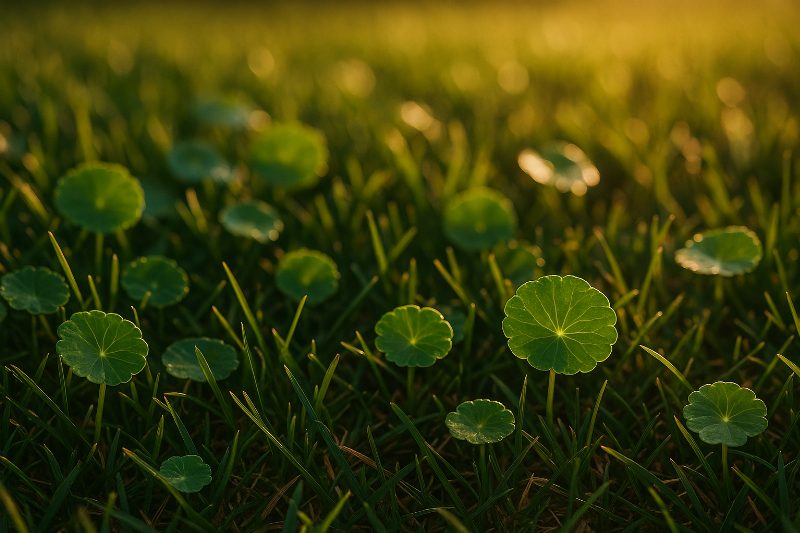
Dollarweed does not sneak up on you slowly - one week you spot a few bright green coins near the sprinkler heads, and three weeks later half your St. Augustine turf is carpeted in them. If that sounds familiar, you are not alone. Dollarweed is one of the most common lawn complaints we hear from homeowners across Bradenton, Lakewood Ranch, Parrish, and all the way out to Anna Maria Island. The good news is that it is very beatable once you understand what is actually driving it.
What Is Dollarweed, Exactly?
Dollarweed (Hydrocotyle spp.) is a warm-season perennial weed that looks almost cheerful - round, glossy leaves about the size of a silver dollar with the stem attached right in the center, like a tiny umbrella. It loves standing water, soggy soil, and high humidity, which means Florida is basically a paradise for it year-round.
It is often confused with pennywort, and for good reason: the two are closely related and behave almost identically. You may also hear neighbors call it "water pennywort" or just "that round-leaf stuff by the fence." Whatever name you use, the control approach is the same.
What makes dollarweed so persistent is its reproductive strategy. It spreads through three separate routes at the same time:
- Underground rhizomes that branch and creep horizontally just below the soil surface
- Seeds that can remain viable in the soil for years
- Stem fragments that root wherever they make contact with moist soil
That last point is important. If you pull dollarweed by hand and leave broken stems behind, you may actually be helping it spread. More on that in a moment.
Why Florida Lawns Are So Vulnerable
Florida's climate gives dollarweed almost everything it needs to thrive: heat, moisture, and a long growing season. But the single biggest factor is water - specifically, too much of it in the wrong place.
Overwatering is the number-one reason dollarweed explodes in residential lawns. Many irrigation systems in Manatee County neighborhoods are set to run far more frequently than the turf actually needs, especially during the rainy season from June through September. When the soil stays consistently saturated, turf grass roots shallow out and weaken, while dollarweed - which is naturally adapted to wetland edges and pond margins - absolutely thrives.
A few other site conditions that invite dollarweed in:
- Poor drainage or low spots where rainwater pools after storms
- Compacted soil that prevents water from percolating down quickly
- Thin or bare turf that leaves open ground for weeds to colonize
- Shade that slows evaporation and keeps soil damp longer
If you are dealing with a recurring dollarweed problem in the same patch of lawn year after year, the weed is giving you useful information. It is pointing at a drainage or irrigation issue that, if you fix it, will make the weed problem much easier to manage long-term.
The Irrigation Audit: Your Most Important First Step
Before you reach for any herbicide, take an honest look at how much water your lawn is actually receiving. Walk your property the morning after an irrigation cycle and look for:
- Puddles or muddy spots that are still wet hours later
- Turf that feels spongy underfoot
- Mildew or algae on soil near sprinkler heads
- Dollarweed concentrated around specific zones or heads
In many cases, simply reducing irrigation frequency - not necessarily duration, but how often the system runs - will dry out the soil enough to stress dollarweed while barely affecting healthy grass. St. Augustine, the most common turf in our area, actually performs better with less frequent, deeper watering than with daily shallow cycles.
Florida law currently restricts irrigation to two days per week for most residential properties in Manatee County outside the rainy season, and restrictions tighten further during dry periods. If your system is running every day, that is both a legal issue and a major reason you have dollarweed.
If you are unsure how to read and adjust your controller, or if you suspect a head is misting when it should be rotating, it is worth getting a professional eye on it. Our team regularly spots irrigation problems during routine lawn care visits, and fixing them is often the single best thing a homeowner can do for the overall health of their turf. You can see the full range of what we offer on our lawn care and landscaping services page.
Cultural Controls: Make the Lawn Less Hospitable
Fixing the water situation is step one. Step two is giving your turf the competitive edge it needs to crowd dollarweed out on its own over time.
Mow at the right height. St. Augustine should be kept at 3.5 to 4 inches in most situations. Cutting it shorter exposes soil to sunlight, helps dollarweed seeds germinate, and weakens the grass so it cannot outcompete weeds. Raise your deck if you have been cutting short.
Fertilize on schedule. A healthy, dense turf is the best long-term weed barrier you have. Thin, pale grass leaves room for dollarweed to move in. A proper fertilization program timed to Florida's growing season keeps turf thick and actively growing. Our frequently asked questions page covers some of the basics about fertilization timing and what nutrients matter most here.
Improve drainage where possible. For low spots that pond regularly, solutions range from simple grading adjustments to installing a French drain. These are not always DIY-friendly projects, but they pay off over years of reduced weed pressure.
Aeration. Compacted soil in high-traffic areas holds water near the surface. Core aeration opens the soil profile, improves drainage, and lets roots go deeper - all of which makes life harder for shallow-rooted weeds like dollarweed.
Hand Pulling: Helpful or Harmful?
Hand pulling dollarweed can be satisfying, but it requires some care. Because dollarweed spreads through stem fragments, aggressive pulling that snaps stems and scatters pieces can backfire. Here is how to do it right:
- Pull when soil is moist but not soaking, so rhizomes come up more intact
- Grasp as close to the soil as possible and pull slowly, trying to get the root system
- Place pulled material directly into a bag - do not leave it on the lawn
- Check the same spot again in two weeks, because you will almost never get every rhizome on the first pass
Hand pulling is most practical for small, early infestations. Once dollarweed has spread across a large area, manual removal alone is not realistic.
Herbicide Options That Actually Work in Florida
When cultural controls are not enough - or when you are dealing with a large, established infestation - herbicides are the most effective tool. The key is choosing the right product and applying it at the right time.
Post-emergent herbicides are what you need once dollarweed is already visible and growing.
The most effective active ingredients for dollarweed in St. Augustine turf include:
- Atrazine - widely available, effective on dollarweed, and safe for St. Augustine when used at label rates. Best applied in cooler months when turf is less stressed.
- Penoxsulam - found in several combination products; works well on dollarweed and is labeled for St. Augustine.
- Image (imazaquin) - a long-established option for Florida lawns, though application timing and rates matter a lot.
- Metsulfuron - often used by professionals for broader broadleaf control; very effective but must be used carefully to avoid turf injury.
A few important notes on herbicide use here in Florida:
Always read the full label before applying anything to your lawn. "St. Augustine safe" on the front of the bottle does not mean you can apply it at any rate and in any condition. High heat - and we get plenty of that in Bradenton and Palmetto - increases the risk of herbicide stress on turf. Avoid applications when temperatures are above 90°F and the turf is already drought-stressed.
Multiple applications are almost always necessary. Dollarweed's rhizomes store energy underground, and one treatment rarely kills the plant completely. Plan for two or three applications spaced three to four weeks apart.
Do not apply right before rain. Herbicides need time to absorb through the leaf surface, and a heavy summer storm washing the product off within an hour or two means you have wasted money and potentially contributed to runoff.
If you have tried over-the-counter products and the dollarweed keeps coming back, it is worth considering a professional program. We work with homeowners across Lakewood Ranch, Ellenton, Parrish, and beyond to put together a weed control plan that actually sticks. Dollarweed is rarely the only weed competing with your turf, and a targeted program that addresses the whole picture tends to get better results than spot-treating one weed at a time.
Watch Out for These Common Mistakes
Mistake 1: Treating without fixing the water problem. Herbicides will knock dollarweed back, but if the soil stays chronically wet, new plants will germinate from the seed bank in the soil within weeks. You end up in a cycle of treating and retreating without ever solving anything.
Mistake 2: Using a product not labeled for St. Augustine. Some broadleaf herbicides that are perfectly safe on bermuda or zoysia will cause serious damage to St. Augustine. Always verify the label lists your turf type before purchasing.
Mistake 3: Expecting one treatment to do it all. Patience matters. A well-planned two or three treatment program over a season will outperform a single heavy application every time.
Mistake 4: Ignoring the rest of the lawn's health. Dollarweed is often one of several problems happening at once in a struggling lawn. Issues like chinch bug damage, gray leaf spot fungus, or take-all root rot can thin out turf and create the bare soil dollarweed needs to take hold. Treating the weed without addressing underlying turf health means the problem will return.
What to Expect Over Time
Realistic expectations help a lot here. If your lawn has a heavy dollarweed infestation, plan for a full season of consistent effort before you see dramatic improvement. The combination of corrected irrigation, improved turf density from proper mowing and fertilization, and two or three targeted herbicide applications will make a visible difference by the end of one growing season.
In the second season, with the soil drying out more consistently and the turf filling back in, dollarweed pressure typically drops significantly. You may still see occasional plants pop up near problem drainage spots, but managing a few stragglers is very different from managing a lawn-wide infestation.
When to Call a Professional
If you have adjusted your irrigation schedule, improved your mowing practices, and applied a labeled herbicide twice without seeing improvement, something else is likely going on - whether that is a drainage problem that needs an engineering solution, a soil chemistry issue, a secondary pest or disease problem weakening your turf, or simply an infestation too large and established to manage effectively with retail products.
Our crews serve Bradenton, Anna Maria Island, Palmetto, and the surrounding communities, and we see every variation of this problem. A site visit takes the guesswork out of it. We can identify what is actually driving the weed pressure, recommend realistic solutions, and put together a plan you can budget for and rely on.
If you are ready to stop fighting dollarweed in circles, reach out to us through our contact page and let us take a look. Sometimes the hardest part of fixing a lawn problem is just knowing where to start, and that is exactly what we are here for.