
Spotting Chinch Bug Damage in St. Augustine Grass
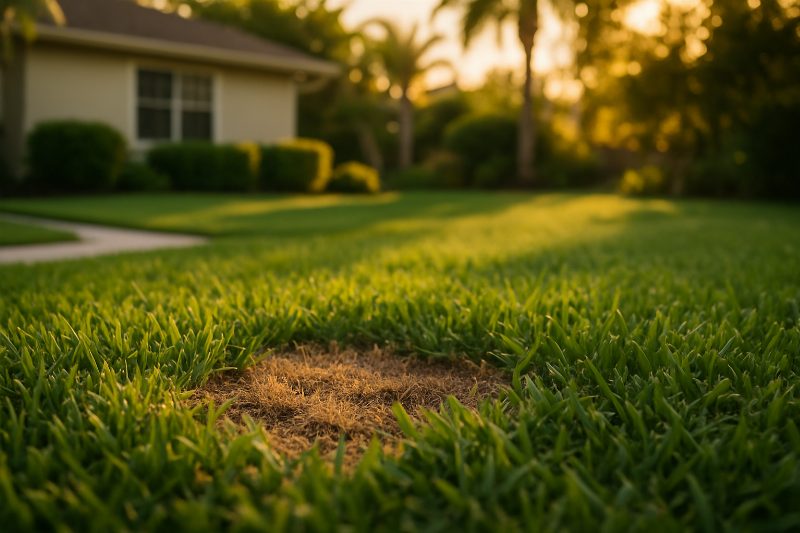
Chinch bugs are small enough to miss with a casual glance, but they are fully capable of turning a lush St. Augustine lawn into a field of straw in a matter of weeks. If you are seeing irregular yellow or brown patches spreading across your turf right now, there is a real chance chinch bugs are the culprit, and every day you wait to confirm it is another day they multiply and spread.
This guide will walk you through exactly what chinch bug damage looks like, how to tell it apart from other common problems, and what steps actually work to stop an infestation before it costs you a full lawn replacement.
What Chinch Bugs Are and Why St. Augustine Grass Is Their Favorite Target
Southern chinch bugs (Blissus insularis) are tiny insects, roughly the size of a sesame seed as adults. They feed by pushing a needle-like mouthpart into individual grass blades and sucking out the plant sap. At the same time, they inject a toxin that blocks the grass's ability to move water and nutrients from the roots upward. That double punch is what makes them so destructive. The grass does not just look weak. It is effectively being poisoned as it is drained.
St. Augustine grass is the preferred host of the southern chinch bug, which is why lawns from Bradenton to Lakewood Ranch and out to Anna Maria Island are so vulnerable. The thick thatch layer that St. Augustine naturally builds up creates perfect harborage: it is warm, sheltered, and moist enough for eggs to hatch quickly. Once a population establishes itself in your thatch, it has everything it needs to explode.
When Chinch Bug Season Peaks in Southwest Florida
Chinch bugs are present year-round in our climate, but populations surge during the hottest, driest stretches of the year. Late spring through early fall is the high-risk window, roughly April through September. The heat speeds up their reproduction cycle dramatically. A single female can lay hundreds of eggs over her lifetime, and in warm Florida temperatures a new generation can develop in as little as six to eight weeks. Populations can stack up fast.
Two conditions supercharge chinch bug outbreaks more than anything else:
- Heat and drought. Stressed grass is easier to attack, and dry conditions reduce the natural soil fungi that keep chinch bug populations in check.
- Excessive nitrogen fertilization. Heavy applications of fast-release nitrogen push lush, soft growth that chinch bugs find especially attractive. Over-fertilizing essentially sets the table for them.
Neighborhoods in Parrish and Ellenton that have newer St. Augustine sod installations are particularly vulnerable. Newly laid sod is often watered and fertilized aggressively, and those conditions can produce an almost ideal environment for a chinch bug outbreak in the first summer after installation.
How to Recognize Chinch Bug Damage
The tricky part about chinch bug damage is that it does not always look like a pest problem at first. The early signs are easy to dismiss as drought stress, irrigation failure, or fertilizer burn. Here is how the damage typically progresses:
Stage 1: Small, irregular yellow patches. The first thing you will notice is a yellow or light-tan area, often starting near a driveway, sidewalk, fence line, or the sunniest part of the yard. These hot, exposed edges are where chinch bugs prefer to feed. The patches are rarely perfectly round or rectangular. They tend to have fuzzy, irregular borders.
Stage 2: The yellow turns brown. As chinch bugs continue feeding and injecting their toxin, the yellowed grass dies. It turns tan to brown and eventually a crispy straw color. Unlike drought stress, the grass blades do not recover when you water. In fact, if you are watering on a normal schedule and still seeing brown patches that do not green back up, that is a significant red flag.
Stage 3: The patches expand outward. Chinch bugs feed and then walk or fly to fresh grass at the edge of the dying area. This is why the patches seem to creep outward over days and weeks. The dead center stays dead while the active damage zone pushes into healthy turf. If you look carefully at the border between dead and living grass, that is exactly where you will find the bugs actively feeding.
Stage 4: Large, connected dead zones. Left unchecked, multiple patches merge into broad areas of dead turf that can cover hundreds or even thousands of square feet. At this stage, the grass is gone and the ground needs to be reseeded or resodded.
It is worth noting that chinch bug damage is easily confused with a few other problems that affect St. Augustine grass in our area. We have put together a detailed comparison in our post on chinch bugs vs. drought stress, which walks through the differences side by side. It is worth a read if you are still not certain what you are dealing with.
How to Confirm You Actually Have Chinch Bugs
Do not treat your lawn based on appearance alone. Confirming the pest is present before you reach for any product saves you money and protects your lawn from unnecessary chemical exposure. Two methods work well:
The tin-can float test. Cut both ends off a large coffee can or soup can and push one end about two inches into the soil at the edge of a damaged patch where the grass transitions from dead to living. Fill the can with water and keep topping it off for about two minutes. Chinch bugs are light enough to float. If you have an active infestation, you will see tiny reddish nymphs or black-and-white adults floating to the surface within a couple of minutes. Finding more than a handful per square foot is enough to confirm treatment is warranted.
A direct visual inspection. Part the grass at the edge of a damaged area and look at the soil surface and thatch layer. Adult chinch bugs are distinctive: they are black with white wings folded flat over their backs, each wing marked with a small triangular black spot. Nymphs range from bright red or orange with a white stripe across the abdomen when young, to darker shades as they age. If you see them moving around in numbers when you disturb the thatch, you have your answer.
What Chinch Bug Damage Is NOT (Common Misdiagnoses)
Because the damage patterns overlap with several other lawn problems, it helps to know what to rule out:
- Drought stress causes widespread yellowing that responds to irrigation. Chinch bug damage does not improve with watering.
- Gray leaf spot is a fungal disease that causes irregular lesions on grass blades and tends to appear during rainy periods, not dry ones. Chinch bugs prefer dry, hot conditions.
- Take-all root rot causes patches that look similar but usually involves roots that pull up easily and appear dark and rotted. Chinch bug damage leaves the root system intact until the plant dies from lack of water movement.
- Mole cricket tunneling disrupts roots and causes a spongy feel underfoot with visible raised tunnels in the soil surface. Chinch bugs leave no tunnel evidence.
Getting the diagnosis right matters because the treatments for each of these are completely different. Treating for chinch bugs when you actually have a fungal disease, or vice versa, will not help and can make things worse.
Treating a Chinch Bug Infestation
Once you have confirmed chinch bugs are present, prompt treatment is important. Here is how the process typically works:
Reduce thatch. A thick thatch layer protects chinch bugs from insecticide contact and keeps natural predators and beneficial fungi out. Core aeration and, where thatch is very thick, power raking can open up the lawn and make treatments far more effective.
Choose the right insecticide. Bifenthrin, imidacloprid, and chlorpyrifos have historically been used for chinch bug control. Bifenthrin is commonly available and works well as a contact insecticide. Imidacloprid is a systemic option that gets taken up by the grass and kills bugs as they feed. Follow label directions precisely. Chinch bugs have developed resistance to some pyrethroid products in parts of Florida, so if a treatment does not seem to be working, rotating to a different class of chemistry is sometimes necessary.
Water correctly before and after. Light irrigation before treatment helps push the product down into the thatch where bugs are living. Irrigation after treatment, following label directions, helps move systemic products into the root zone.
Repeat applications. One treatment rarely handles a heavy infestation completely. A follow-up application two to three weeks later is typically needed to catch any nymphs that hatched after the first treatment.
Repair damaged areas. Once the infestation is under control, dead turf will not regenerate. You will need to resod or plug the damaged patches. This is also a good time to review your irrigation and fertilization programs to reduce the conditions that allowed the outbreak to happen.
Cultural Habits That Reduce Chinch Bug Risk
Long-term prevention is mostly about keeping your lawn healthy and avoiding the practices that make infestations worse:
- Mow at the right height for St. Augustine grass, typically three and a half to four inches. Scalping the lawn stresses it and makes it more attractive to chinch bugs.
- Water deeply and infrequently rather than lightly and often. Deep watering encourages deep roots and discourages the shallow thatch conditions that harbor chinch bugs.
- Use slow-release nitrogen fertilizers instead of high-dose fast-release products. They feed the lawn steadily without pushing the kind of soft, lush growth chinch bugs target.
- Keep an eye on the sunny edges of your lawn all summer. Those spots along driveways, sidewalks, and fence lines in Palmetto and other areas with intense afternoon sun exposure are almost always where outbreaks begin. Catching the first yellow patch early can mean the difference between a small spot treatment and a major infestation.
When to Call a Professional
There are times when a DIY approach is not enough. If the damage is spreading rapidly, if you are not confident in the identification, or if a previous treatment did not work, a professional assessment makes sense. Chinch bug resistance to certain products is real, and a professional can identify which chemistry is appropriate for your specific situation. A professional can also handle the thatch management, the repair sodding, and the follow-up monitoring as a coordinated plan rather than a series of reactive steps.
Our team serves homeowners throughout Bradenton, Lakewood Ranch, Palmetto, Parrish, Ellenton, and Anna Maria Island. You can learn more about our approach on the about page or browse our full range of lawn care and landscaping services. If you have questions about whether what you are seeing is chinch bug damage or something else entirely, our FAQ page covers many of the most common lawn problems we see across Manatee County.
Do not wait until the patches merge and you are looking at a full resod bill. Get in touch with us at the first sign of trouble and we will walk you through exactly what you are dealing with and what it will take to get your lawn back.