
Mulch in Florida: How Much, How Often, and Which Kind
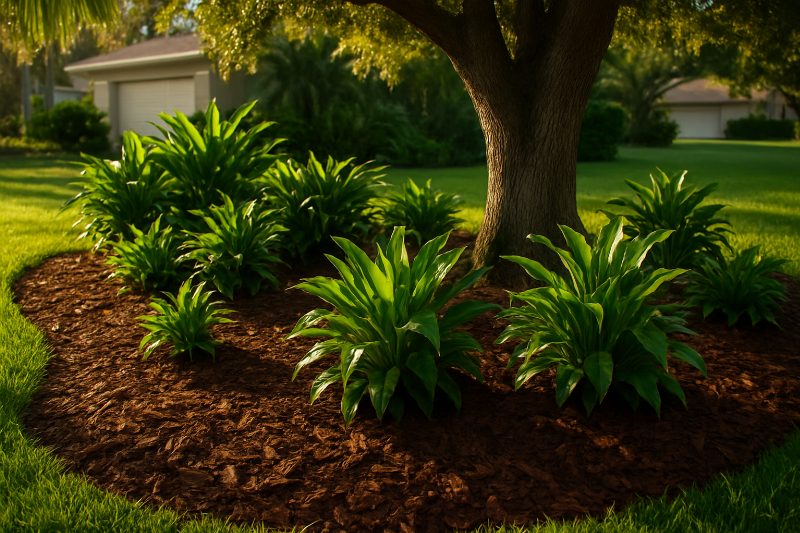
Florida soil will humble you fast. You can plant the right shrubs, water on schedule, and fertilize correctly, but if your mulch game is off, your beds will cook in summer, drown in August, and dry to concrete in October. Mulch is not decoration. In this climate it is one of the most practical tools you have for keeping roots alive and landscaping looking good between visits from your lawn crew.
This guide covers the three questions we hear most from homeowners across Bradenton, Lakewood Ranch, Palmetto, Parrish, Ellenton, and Anna Maria Island: Which kind of mulch should I buy? How deep should I go? And how often do I need to top it off?
Why Mulch Matters More in Florida Than Almost Anywhere Else
Most of the continental United States uses mulch mainly for looks. Here, it is doing real work year-round. A few reasons the stakes are higher in Manatee County:
- Summer soil temperatures can exceed 100°F just a few inches below the surface. A proper mulch layer can drop that by 10 to 15 degrees, which is the difference between thriving roots and stressed, disease-prone ones.
- Afternoon downpours are intense and frequent. Without mulch, that sheet of water compacts bare soil, splashes soil-borne fungal spores onto plant stems, and carries away nutrients before roots can absorb them.
- Sandy, nutrient-poor soil drains quickly. Organic mulch feeds the soil as it breaks down, slowly improving the structure that Florida's native sand lacks.
- Weeds love warmth. A thick mulch layer starves weed seeds of the light they need to germinate, reducing the time you spend pulling nuisance plants out of your flower beds.
None of this is complicated, but the details matter. The wrong depth or the wrong material can actually make problems worse.
The Three Main Mulch Types for Florida Landscapes
Walk into any hardware store or call a mulch supplier in the Bradenton area and you will find a lot of options. Here is an honest look at the ones worth considering.
Pine Bark Nuggets and Mini-Nuggets
Pine bark is one of the most popular choices in Florida, and for good reason. It is slow to decompose, which means it holds its appearance and function longer than most organic options. The chunks interlock loosely, allowing rain to pass through easily without washing away in a heavy storm. It also resists compaction, so air and water continue moving into the soil beneath it.
Mini-nuggets work better around smaller perennials and annuals where large chunks look out of scale. Full-size nuggets are ideal for shrub beds and around trees. One caution: pine bark nuggets can float and migrate during heavy rains, especially on slopes. If you have a graded yard with runoff channels, keep that in mind.
Shredded Hardwood or Eucalyptus Mulch
Shredded mulch knits together once it settles, forming a mat that stays put better than nuggets on slopes or in windy spots near the Gulf. It decomposes faster than pine bark, which means it adds organic matter to the soil more quickly but also needs to be refreshed more often.
In the Bradenton and Lakewood Ranch areas, shredded eucalyptus mulch has become a popular choice because it is locally sourced and breaks down into a material that genuinely improves soil structure over time. It also has natural oils that slow weed germination somewhat, though no mulch is a complete weed barrier on its own.
Cypress Mulch: Use With Caution
Cypress mulch used to be the default answer in Florida. It resists decay and pests, and it was widely available. The problem is environmental. Most commercially sold cypress mulch is harvested from old-growth or mature cypress wetlands that take generations to recover. Conservation organizations across the state have been asking homeowners to move away from it, and most professional landscapers in the area have already made that shift. There are better options that do not come with that cost.
Pine Straw (Pine Needles)
Pine straw is an excellent option for acid-loving plants like azaleas, gardenias, and blueberries. It allows rain to pass through easily, stays in place relatively well, and breaks down slowly. Because it naturally acidifies the soil slightly as it decomposes, avoid using it around plants that prefer a neutral to alkaline pH. It is also a lighter look than bark, which some homeowners prefer in more naturalistic garden designs.
Rubber and Dyed Mulch: Worth Avoiding
Rubber mulch made from recycled tires and heavily dyed wood products are sometimes marketed as long-lasting, low-maintenance options. In Florida's heat, rubber mulch can get dangerously hot and may leach compounds into the soil over time. Dyed mulches often use wood waste that breaks down much faster than the color suggests, and some dyes can affect soil biology. Neither option is something we recommend for plant health.
How Deep Should Mulch Be?
This is where most homeowners go wrong in one of two directions: too thin or too thick.
The target depth is 2 to 3 inches for most landscape beds.
Less than 2 inches and you are not getting meaningful temperature regulation or weed suppression. More than 4 inches and you start creating real problems: oxygen gets cut off from roots, the mulch stays constantly moist against plant stems and bark, and you create perfect conditions for rot and fungal disease.
A common sight in neighborhoods around Parrish and Ellenton is what landscape professionals call a "mulch volcano" - a huge mound of mulch piled right up against the trunk of a tree or the base of a shrub. This is one of the more damaging things you can do to a plant. Moisture trapped against bark invites fungal infections and insect damage. Tree trunks need to stay dry at the base. Keep mulch pulled back 2 to 3 inches from stems and trunks, leaving a small gap so air can circulate.
For ground cover beds and annual color beds, you can lean toward the thinner end of the range (2 inches) so plants are not smothered. For large shrub beds and the areas around established trees, 3 inches is ideal.
How Often Does Florida Mulch Need to Be Refreshed?
In cooler climates, a good mulch job might last two to three years before needing attention. In Manatee County, expect to refresh mulch once or twice a year.
Here is why: Florida's heat and humidity accelerate decomposition. A 3-inch layer of shredded hardwood mulch that looks great in March can be down to an inch of dark, compacted material by September. Pine bark holds up better, but even that breaks down faster here than the bags suggest.
A practical schedule for most yards:
- Spring (March/April): This is the most important refresh. Top off beds to 3 inches before summer heat arrives. This is also a good time to pull out any compacted old material before adding new product, since a layer of dense decomposed mulch can actually repel water rather than absorb it.
- Fall (October/November): A lighter top-off of 1 to 2 inches is usually enough to carry beds through the dry season and look fresh heading into the holiday months.
Homeowners on Anna Maria Island often need to refresh more frequently because salt air and coastal winds can dry out and scatter lighter mulches faster than in inland areas like Lakewood Ranch. If you are right on the water, pine bark nuggets tend to hold up better than shredded material.
Common Mulching Mistakes to Avoid
Even well-intentioned mulching can backfire. Here are the ones we see most often:
- Piling mulch against tree trunks. Already covered above, but worth repeating because it causes so much long-term damage.
- Skipping the edge. Mulch that just fades into the lawn gets mixed with grass clippings and soil quickly. Clean bed edges hold mulch in place and make the whole yard look sharper.
- Using landscape fabric under mulch. This is a near-universal mistake. Fabric feels like it should stop weeds, but within a season or two it becomes clogged with decomposed mulch and blocks water and air from reaching roots. Weeds root into the fabric itself and become harder to pull than ever. Skip the fabric and use proper mulch depth instead.
- Ignoring grading. If your beds slope toward the house, mulch can direct water toward your foundation during heavy rains. Make sure beds slope slightly away or install an edge that keeps mulch contained.
- Mixing mulch types haphazardly. Topping off old rubber or dyed mulch with organic material will not undo the issues those products create. If you have problem mulch down, it is worth removing it before starting fresh.
Pairing Good Mulch With the Rest of Your Lawn Care Routine
Mulch is one piece of a larger system. Healthy beds also depend on proper irrigation (mulch should be moist, not saturated), correct fertilization timing, and watching for pests and disease. If you are seeing patches of bare soil in your turf that refuse to recover, it could be a sign of something like Take-All Root Rot, which thrives in conditions where soil health has been neglected. Similarly, stressed turf edges near beds are sometimes misread as drought when chinch bugs or other pests are the real culprit.
Good mulch keeps beds healthier and reduces the environmental stress that makes plants and turf more vulnerable in the first place.
If you are dealing with weeds pushing through existing mulch, the problem might not be depth alone. Some persistent weeds like nutsedge can grow right through a thick mulch layer. Our guide on how to get rid of nutsedge in a Florida lawn explains why that weed is so stubborn and what actually works against it.
Getting Professional Help With Your Mulch and Bed Maintenance
Choosing and installing mulch correctly is straightforward once you know the rules, but it is also one of those jobs that benefits from having the right equipment and enough hands to do it efficiently. Spreading mulch properly across large beds, pulling out compacted old material, maintaining clean edges, and making sure every plant trunk has breathing room takes real time.
Our team handles landscaping and bed maintenance throughout Manatee County. You can see the full range of what we offer on our lawn care and landscaping services page, or explore what we do in your specific neighborhood on our Bradenton lawn care page, Lakewood Ranch lawn care page, and Parrish lawn care page.
If you have questions about mulch types, timing, or what would work best for your specific yard, our FAQ page covers many of the most common questions, or you can reach out directly for advice tailored to your property.
A little mulch goes a long way in Florida, as long as you use the right kind in the right amount at the right time of year. Get those three things right and your beds will be easier to maintain, your plants will be healthier, and your yard will hold up through whatever summer throws at it.