
Hedge trimming timing mistakes that damage Florida shrubs
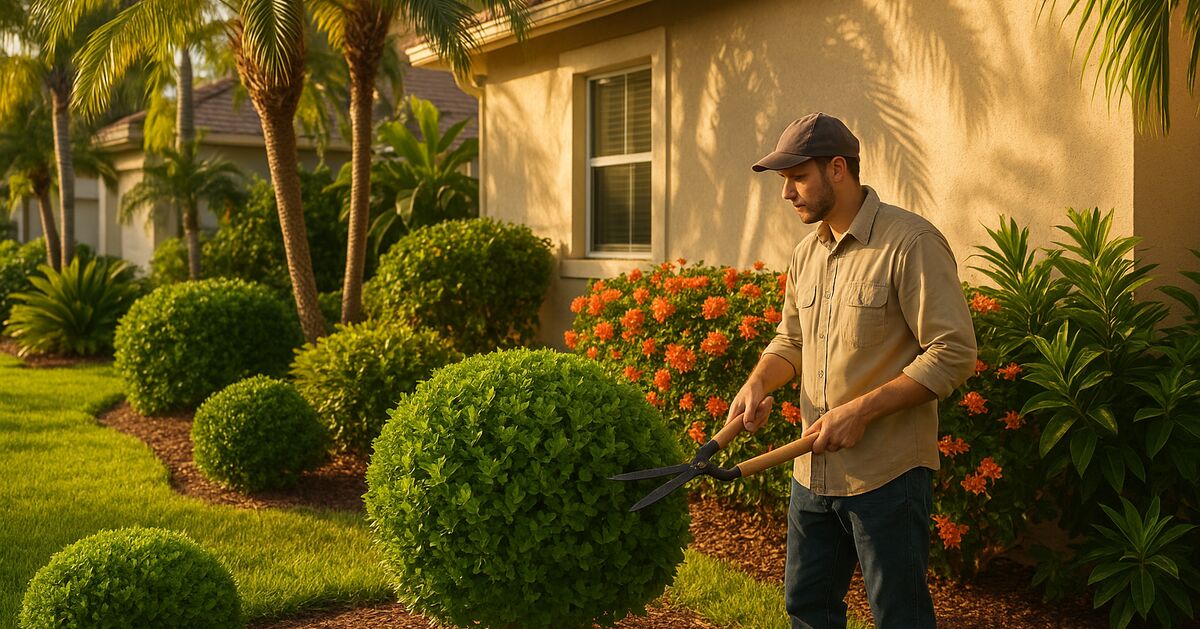
Florida shrubs forgive a lot of things. Trimming them at the wrong moment is not one of them.
Unlike lawns that bounce back from a bad mow in a few weeks, a shrub cut at the wrong time of year can lose an entire season of blooms, invite fungal disease through fresh wounds during the rainy season, or suffer dieback from a cold snap that chews through tissue that was just forced into a flush of tender new growth. Some of those mistakes take years to recover from. A few are essentially permanent.
This guide walks through the most popular shrubs you'll find in yards across Bradenton, Lakewood Ranch, Palmetto, Parrish, Ellenton, and Anna Maria Island, explains exactly why timing matters for each one, and names the specific mistakes that come up again and again when homeowners or inexperienced crews do the trimming without a plan.
Why timing matters more in Florida than anywhere else
In most of the country, shrub trimming is a spring-and-fall affair. Florida doesn't work that way. Our climate gives plants nearly year-round growing seasons, and it stacks two major stress periods back to back: a hot, wet summer full of fungal pressure, and a winter that delivers occasional cold snaps capable of burning unprotected tissue.
When you cut a shrub, it responds by pushing new growth to replace what was removed. That new growth is soft and vulnerable. Time the cut so that flush of growth arrives just before:
- A hard cold front in January or February
- The peak of rainy season (June through September) when fungal spores are everywhere
- A drought period when the plant can't sustain new tissue
...and you've created a serious problem. The fresh wounds themselves are also entry points for pathogens. Pruning during wet conditions can promote the spread of bacterial and fungal diseases in ornamental shrubs, which is a particular concern in humid coastal climates like Manatee and Sarasota counties.
Timing your cuts so new growth has time to harden off before a stress period is the single most protective thing you can do for your shrubs.
Viburnum: the shrub that punishes late-summer haircuts
Viburnum odoratissimum and Walter's viburnum are everywhere in Southwest Florida. They're fast-growing, dense, and commonly used as privacy hedges from Parrish subdivisions all the way out to beachside lots on Anna Maria Island. That fast growth tempts homeowners to reach for the hedge trimmer any time the hedge starts looking shaggy.
The timing mistake that comes up repeatedly with viburnum is heavy cutting in August or September. Here's why that's a problem:
When you shear a viburnum hard in late summer, the plant pushes a wave of soft new leaves just in time for the peak of Cercospora leaf spot and other fungal diseases that thrive in warm, wet conditions. Spores land on the tender tissue, infections spread, and by October you can have a hedge that looks scorched from the inside out.
The better window for major viburnum shaping is late winter, roughly late January through February, after the coldest nights have passed but before the rainy season begins. A light touch-up in early May is fine. Avoid heavy cuts from mid-July through mid-October.
Ixora: never trim before spring bloom, ever
Ixora is one of the most misunderstood shrubs in Florida. Its brilliant orange-red flower clusters are a hallmark of landscaped yards in Bradenton and Lakewood Ranch, but many homeowners never see those flowers because their ixora gets sheared like a boxwood on a quarterly maintenance schedule.
Ixora blooms on new growth that develops in spring. If you cut the shrub hard in late winter or early spring, you are removing exactly the growth that would have set flower buds. Repeat that mistake year after year and the plant becomes a tight, leggy green ball that never flowers.
The right approach:
- Allow the plant to push its spring growth and bloom (typically March through May)
- Do any major shaping in late spring, after the first bloom flush finishes
- Avoid shearing into old wood; ixora does not regenerate vigorously from bare stems the way some shrubs do
- Keep cuts light in fall and skip heavy winter pruning entirely
Ixora is also sensitive to cold. A hard trim in November that forces new growth heading into December and January can lead to tip dieback on any variety that isn't cold-tolerant. In Parrish and inland Ellenton, where temperatures dip a few degrees colder than coastal areas, this is an especially common source of damage.
Podocarpus: the slow grower you should almost never rush
Podocarpus is a popular choice for tall, formal hedges. It is slow. That slow growth is a feature, not a bug, because it means a well-established podocarpus hedge requires minimal trimming. But it also means that any serious trimming mistake takes a long time to heal.
The timing error seen with podocarpus is cutting into the old, dark wood repeatedly in an effort to reduce an overgrown hedge. Podocarpus does not backbud reliably from bare wood the way a viburnum or ficus does. If you shear it back past the green layer repeatedly, the exposed sections can remain bare for years or die back entirely.
Podocarpus is best trimmed lightly two to three times a year to maintain shape, with the primary cut in early spring (February to March) and a maintenance pass in early summer before the rainy season intensifies. Avoid heavy renovation cuts in summer when fungal pressure is high and the plant is stressed.
Clusia: don't let the tough reputation fool you
Clusia guttifera (the small-leaf clusia) has a reputation as a nearly indestructible hedge plant, and in terms of drought and salt tolerance it earns that reputation. Homeowners along the coast on Anna Maria Island love it for exactly that reason.
The trimming mistake with clusia involves cutting too late in the fall. Clusia that receives a hard cut in October or November pushes new growth that sits exposed through the coolest months. The plant itself won't die, but the fresh tips can burn on cold nights, leaving a brown fringe that takes months to grow out. In a neighborhood where curb appeal matters, that's a frustrating wait.
The ideal windows for clusia are spring (March to April) and early summer (May to early June). A light pass in late summer is acceptable if you leave enough time for tissue to harden before October.
Bougainvillea: cut at the right moment to trigger the bloom cycle
Bougainvillea in Southwest Florida can bloom almost year-round, but it cycles through phases of growth and dormancy that are triggered by both temperature and, crucially, the stress of pruning. Many homeowners cut bougainvillea at random and then wonder why it's all green leaves and no color.
Bougainvillea blooms most heavily when it experiences mild stress, including a period of reduced watering and a well-timed trim. The best practice for maximum bloom:
- Prune in late January or February after any risk of frost has passed in your specific area
- Follow the cut with a reduction in irrigation for two to three weeks, since mild water stress helps trigger the bloom cycle.
- Allow the new growth to mature and the plant will typically set a heavy flush of bracts within eight to twelve weeks
Cutting bougainvillea heavily during the summer rainy season produces lush green growth and few bracts. Cutting it in October can push new growth into the teeth of a November or December cold front. Neither is a good look. Our lawn care and landscaping services team often fields calls from homeowners who have been cutting their bougainvillea at the wrong moment for years and wonder why it stopped blooming.
Firebush and Pentas: the natives that reward (and punish) timing
Native and Florida-friendly shrubs like firebush (Hamelia patens) and pentas are popular in pollinator gardens from Palmetto to Lakewood Ranch. Both bloom repeatedly and both benefit from periodic cutting to encourage fresh flowering stems.
The timing issue here is less about a single catastrophic mistake and more about cumulative damage from cutting too aggressively in late fall. Firebush, in particular, can handle a hard cutback in spring with no complaints. Cut it back hard in November and the bare stems sit exposed through any cold weather, often dying back further than you intended and taking until April to recover.
For firebush, the reliable window is late February to early March. For pentas, light deadheading and tip pruning can happen almost any time, but avoid heavy cutbacks from November through January.
Ficus hedges: the rainy-season trimming trap
Ficus benjamina and similar ficus hedges are still common in older neighborhoods in Bradenton and Ellenton, even though their invasive root systems have made them less popular for new plantings. They grow aggressively and often need trimming three or four times a year to stay manageable.
The specific mistake with ficus is heavy trimming during peak rainy season (July and August) combined with the spread of ficus whitefly. Trimming opens the hedge's interior to air and light, which sounds beneficial, but it also stresses the plant at the same moment whitefly populations are at their peak. A stressed, freshly cut ficus with an active whitefly infestation can defoliate faster than most homeowners expect.
Time major ficus cuts for late February to March and again in late May or early June, before rainy season hits full stride. Monitor for sooty mold on the underside of leaves, a common visible sign of an active whitefly infestation.
The "quarterly schedule regardless of plant type" mistake
One of the most damaging habits in residential landscape maintenance is applying a one-size-fits-all trimming schedule to every shrub in the yard. A crew that trims every plant every quarter, on the same calendar dates, regardless of species, bloom cycle, or seasonal conditions, will reliably:
- Strip flower buds from ixora, bougainvillea, and pentas
- Force tender growth on viburnum and clusia heading into cold months or rainy season
- Wound shrubs repeatedly during periods of high fungal pressure
If you are hiring a lawn care company in the Bradenton or Lakewood Ranch area, ask specifically how they schedule shrub trimming. A good answer involves species-specific timing and seasonal awareness. A concerning answer is "we come every eight weeks and trim everything."
What about after a freeze?
Manatee County doesn't get hard freezes often, but they happen often enough that every homeowner should know the rule: wait before you cut.
Freeze-damaged tissue looks brown and dead, and the instinct is to cut it away immediately. Resist that instinct until mid-February at the earliest, preferably until you're confident there are no more cold nights ahead. Removing the damaged tissue too early exposes the living wood beneath to any subsequent cold event. The dead material, as ugly as it looks, provides a small amount of insulation to the tissue below it.
Once you are certain cold weather has passed, cut back to living tissue (look for green under the bark when you scratch it lightly) and allow the plant to recover on its own timeline. Fertilizing too soon after a freeze can push soft growth before the plant has stabilized, which is counterproductive. As a general rule, wait until the plant shows active new growth before resuming any fertilization program.
Putting it all together: a practical seasonal framework
Here's a simple framework for the most common shrubs in our area:
Late January to mid-February:
- Bougainvillea (major shaping)
- Firebush (hard cutback if needed)
- Podocarpus (primary annual trim)
Late February to April:
- Viburnum (major shaping)
- Clusia (primary shaping)
- Ficus (first major cut of the year)
Late May to early June (pre-rainy season window):
- Ficus (second major cut)
- Clusia (light maintenance)
- Podocarpus (light maintenance)
- Ixora (after first bloom flush)
July through September:
- Light touch-ups only, no heavy renovation cuts on any species
- Monitor for disease and pests rather than reaching for the trimmer
October through December:
- Avoid heavy cuts
- Light shaping only where absolutely necessary for appearance
You can find more on how our team approaches year-round plant health on our lawn care and landscaping services page and across our full range of service areas.
When in doubt, less is more
Florida's warm climate means shrubs can recover from a lot, but "can recover" is different from "will recover quickly." A hedge that took three years to establish its shape can take another two to recover from one badly timed heavy cut. The general principle that holds across many species here is this: if you are unsure of the timing, make a lighter cut than you think you need. You can always take more off in the next seasonal window. You cannot put growth back.
For homeowners managing large landscapes in communities across Bradenton, Lakewood Ranch, or anywhere else in Manatee County, seasonal shrub care is one of those details that separates a yard that looks consistently good from one that always seems to be recovering from something.
If you'd like an assessment of your specific shrubs and a trimming plan that matches each plant's natural cycle, reach out to our team. We're happy to walk through what's in your yard and build a schedule that actually works with Florida's seasons rather than against them.
Sources & further reading
- Ixora: Florida's Most Popular Landscape Plant (University of Florida IFAS Extension)
- Viburnum for Florida Landscapes (University of Florida IFAS Extension)
- Cold Protection and Freeze Recovery for Florida Landscapes (University of Florida IFAS Extension)
- Clusia guttifera: Small Leaf Clusia (University of Florida IFAS Extension)
- UF/IFAS Extension (named in this article) (UF/IFAS Extension)
Claim-by-claim audit (4 checked)
- “Pruning during wet conditions can promote the spread of bacterial and fungal diseases in ornamental shrubs, which is a particular concern in humid coastal climates like Manatee and…” (rewritten to what the article can stand behind)
- “Follow the cut with a reduction in irrigation for two to three weeks, since mild water stress helps trigger the bloom cycle.” (rewritten to what the article can stand behind)
- “Monitor for sooty mold on the underside of leaves, a common visible sign of an active whitefly infestation.” (rewritten to what the article can stand behind)
- “As a general rule, wait until the plant shows active new growth before resuming any fertilization program.” (rewritten to what the article can stand behind)