
Biopesticides vs. synthetic insecticides for chinch bugs
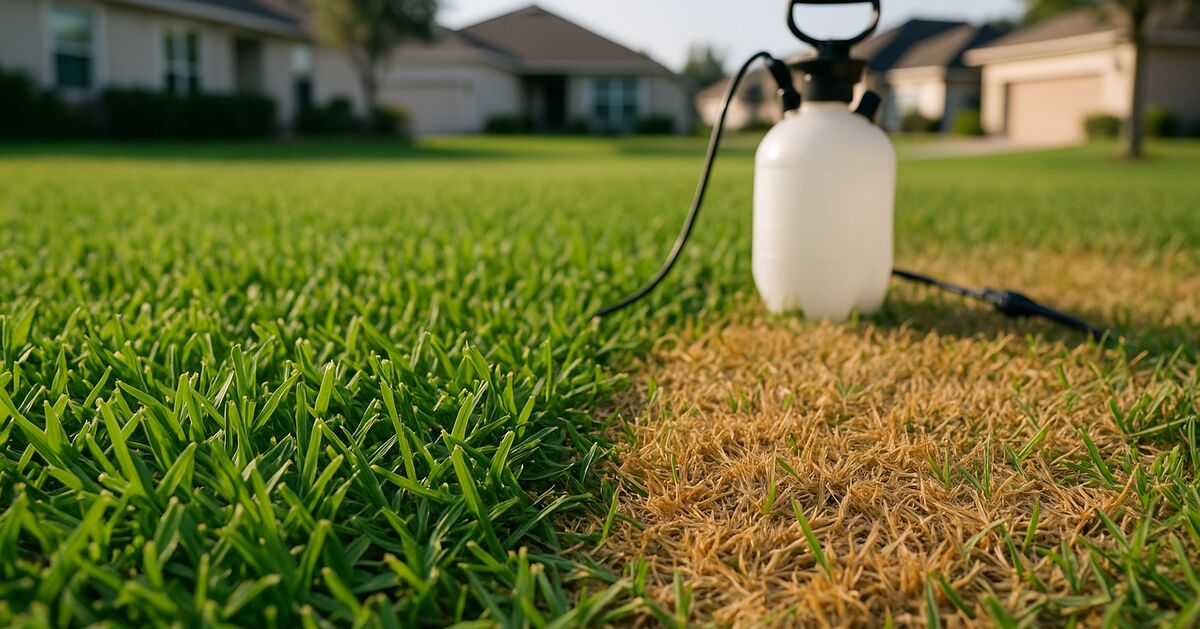
Chinch bugs do not give homeowners much warning. One week you see a few yellowing patches near the curb; two weeks later a quarter of the lawn looks torched. If you've already read up on spotting and confirming a chinch bug infestation, you know how fast these pests move. What many homeowners in Bradenton, Lakewood Ranch, and across Manatee County wrestle with next is the treatment decision: do you go with a conventional synthetic insecticide for fast knockdown, or try a biopesticide that is gentler on the environment? The honest answer is that both have real merit and real limitations, and the right call depends on factors specific to your lawn.
This post walks through how each option works, where each one falls short, and what a sensible integrated approach looks like for Florida turf conditions.
What exactly are we talking about? Defining the two categories
"Synthetic insecticide" covers a broad family of manufactured chemicals designed to kill or disrupt insect biology. The most common active ingredients used against chinch bugs in Florida include bifenthrin, permethrin, imidacloprid, and thiamethoxam. They are widely available at big-box stores and through licensed pest control operators.
"Biopesticide" is a term regulated by the U.S. Environmental Protection Agency (EPA) and refers to pesticides derived from natural materials: microorganisms, plant extracts, or naturally occurring minerals. The EPA's biopesticides program divides them into three main categories: microbial pesticides (such as fungi or bacteria), plant-incorporated protectants, and biochemical pesticides (such as essential oils or insect growth regulators derived from natural sources). Beauveria bassiana, a naturally occurring soil fungus, is the most studied microbial biopesticide against southern chinch bugs (Blissus insularis) on St. Augustine grass in Florida.
Understanding the regulatory definition matters because some products marketed as "natural" or "organic" do not meet the EPA biopesticide definition, while some products on that EPA list still require careful handling. Labels are legal documents, and reading one end-to-end before you apply anything is not optional.
How synthetic insecticides work on chinch bugs
Pyrethroids such as bifenthrin work by disrupting the sodium channels in insect nerve cells, causing paralysis and death relatively quickly. Neonicotinoids like imidacloprid are systemic, meaning the plant absorbs them and the insect picks up the chemical while feeding on plant tissue. Both modes of action tend to produce visible results within 24 to 72 hours, which is a genuine advantage when an infestation is advancing fast.
That speed comes with tradeoffs worth knowing:
- Resistance development. Researchers at the University of Florida Institute of Food and Agricultural Sciences (UF/IFAS) have documented bifenthrin resistance in southern chinch bug populations across multiple Florida counties. Repeated applications of the same chemistry accelerate this process.
- Non-target effects. Pyrethroids can be highly toxic to aquatic invertebrates and moderately toxic to bees, according to general pesticide toxicity information. In coastal communities like Anna Maria Island or along the waterways in Palmetto and Ellenton, runoff after rain can carry residues into canals and the estuary system.
- Beneficial insect disruption. Synthetic broadspectrum insecticides can suppress populations of big-eyed bugs (Geocoris spp.) and other predatory insects that naturally keep chinch bug numbers in check between treatment cycles. Reducing those natural controls can leave your lawn more vulnerable to the next outbreak.
- Re-entry intervals and water restrictions. Per label requirements and Manatee County watering schedules, irrigation timing after application matters for both efficacy and legal compliance. Applying a systemic insecticide right before a forecast storm can push product off your lawn and into the street before it binds to the thatch layer.
None of these concerns means you should never use a synthetic product. They mean you should use one deliberately, with the right active ingredient, at the right rate, at the right time, and not as a reflex every time you see a yellowing spot.
How biopesticides work on chinch bugs
The most promising biopesticide option for chinch bugs is Beauveria bassiana, a soil fungus that infects insects through direct contact. The spores attach to the cuticle of the insect, germinate, penetrate, and eventually kill the host. Commercially formulated products containing Beauveria bassiana are registered with the EPA and available to both homeowners and licensed applicators.
What makes this approach attractive in Florida:
- No documented resistance in target insects. Because the mode of action is biological infection rather than a single chemical mechanism, it is inherently harder for insects to develop resistance.
- Low mammalian toxicity. Per the EPA's biopesticides program, Beauveria bassiana products have favorable toxicological profiles for humans and domestic animals.
- Compatible with beneficial insects. Because Beauveria bassiana targets insects through infection rather than broad chemical action, it is generally believed to be gentler on big-eyed bugs and other beneficial predators than pyrethroid applications.
- Fits within Florida's environmental framework. Given the proximity of so many Manatee County neighborhoods to waterways, biopesticides present a lower runoff risk profile.
The honest limitations:
- Slower kill. Death is not immediate. Depending on temperature, humidity, and spore viability, you may not see a sharp population decline for a week to two weeks. If a lawn is already at 30 to 40 percent damage and the infestation is peaking, that lag time can mean additional turf loss.
- Moisture dependency. Beauveria bassiana spores need moderate moisture and moderate temperatures to germinate effectively. During a hot, dry Southwest Florida summer, surface thatch can get hot enough to reduce spore viability before infection takes hold. Morning applications when the turf is still cool and slightly damp improve efficacy.
- Shorter residual activity. UV light from the Florida sun degrades fungal spores faster than it degrades most synthetic active ingredients. Applications may need to be repeated more frequently.
- Product availability. Finding a quality Beauveria bassiana formulation at a local hardware store in Parrish or Ellenton is less reliable than finding bifenthrin. Some products require purchase through commercial horticultural suppliers or online.
The resistance problem is real, and it matters for Manatee County lawns
The University of Florida Institute of Food and Agricultural Sciences has produced extension literature specifically addressing bifenthrin resistance in southern chinch bugs in Florida. The concern is not theoretical. Homeowners who apply the same pyrethroid product two or three times per season, year after year, can inadvertently select for a resistant population. Once that population establishes, switching to a different pyrethroid in the same chemical class may not solve the problem. This is one of the strongest practical arguments for rotating chemistries and for incorporating biopesticides as part of a rotation strategy, even if you are not fully committed to a biopesticide-only approach.
For homeowners in Lakewood Ranch and Bradenton where St. Augustine lawns are the dominant turf type and chinch bugs are a recurring seasonal challenge, rotation is not a niche idea. It is sound pest management.
Integrated pest management: what combining both approaches looks like
Integrated Pest Management (IPM) is a framework recommended by the EPA and UF/IFAS extension services that emphasizes using multiple tools in combination, with pesticide use targeted and rotated rather than reflexive. For chinch bugs in Florida, a practical IPM plan might look like this:
- Confirm the pest before treating. Yellow patches near hot pavement or sunny areas can look identical to drought stress or take-all root rot. The flotation test (pressing a can into the soil, filling with water, and counting insects that float up) is a simple confirmation step described in UF/IFAS publication ENY-325.
- Start with cultural controls. Proper irrigation, avoiding over-fertilization with nitrogen during peak chinch bug season, and maintaining healthy thatch levels below three-quarters of an inch reduce conditions that favor chinch bug outbreaks. Our post on how to read a soil test and fix your Manatee County lawn covers the soil conditions that lead to unhealthy turf overall.
- Apply biopesticide at first confirmed detection. If population numbers are modest and the damage is limited to a patch or two, a Beauveria bassiana application gives you a chance at knockdown without selecting for resistance or harming beneficial insects.
- Reserve synthetic insecticides for heavy infestations. When damage is advancing fast and a large area is threatened, the speed advantage of a pyrethroid or neonicotinoid is worth the tradeoffs. Use it once, at label rate, and follow up by rotating to a different mode of action or a biopesticide at the next treatment window.
- Protect natural predators. Big-eyed bugs and earwigs prey on chinch bugs naturally. Broad-spectrum applications that wipe out these beneficials can create a rebound effect where chinch bugs return faster than before.
- Respect label rates. Applying more product than the label specifies is a federal violation and does not produce better results. Per FIFRA (the Federal Insecticide, Fungicide, and Rodenticide Act), the label is the law.
A note on application timing in Florida's climate
Southwest Florida's weather introduces complications not faced in most of the country. Rain events in the summer rainy season (roughly June through September) can wash product off the lawn before it bonds to the thatch layer. Soil temperatures above 95 degrees Fahrenheit can degrade fungal spores rapidly. And Manatee County's fertilizer ordinance, which limits certain nutrient applications during the wet season, intersects with pest management decisions because the health of your turf going into chinch bug season partly determines how much damage it can tolerate.
Our lawn care and landscaping services team factors these local timing considerations into every treatment recommendation. What works in Georgia or the Carolinas does not always translate to Bradenton or Parrish.
What about "organic" or "natural" products that aren't EPA biopesticides?
A walk down the garden center aisle in any Manatee County hardware store will show products labeled "natural," "organic," or "safe." Not all of them are EPA-registered biopesticides. Some contain diatomaceous earth, which can damage insect exoskeletons but degrades quickly when wet and has limited residual efficacy outdoors. Others contain plant-derived essential oils (clove oil, rosemary oil) that can repel or kill soft-bodied insects on contact but have almost no residual activity and may require multiple applications per week to maintain any effect on an active chinch bug infestation.
These products are not useless, but treating a serious chinch bug infestation on a 5,000-square-foot Lakewood Ranch lawn with clove oil alone is unlikely to get ahead of the problem. Use them as supplementary tools, not primary controls.
When to call a professional
Some situations genuinely call for licensed intervention. If you are not sure what pest you're dealing with, if the infestation covers a large area, or if you've already applied product and seen no improvement, a professional assessment is worth more than another trip to the hardware store. Professionals can identify resistance patterns, confirm the pest and damage cause accurately, and apply commercial-grade products with proper equipment calibration.
Our team works across all of our Manatee County service areas, from the quiet streets of Ellenton and Palmetto to the waterfront properties of Anna Maria Island, where environmental sensitivity around product selection is especially important. Feel free to reach out to us with questions before you treat.
The bottom line for Florida homeowners
Neither biopesticides nor synthetic insecticides are universally the right answer for chinch bugs. Biopesticides offer a lower-risk profile, preserve beneficial insects, and avoid accelerating resistance, but they are slower and require favorable conditions to work well. Synthetic insecticides deliver fast knockdown when an infestation is moving aggressively, but overuse drives resistance and creates collateral damage to the ecosystem that sustains your lawn's long-term health.
The smartest approach uses both tools intentionally: confirm before you treat, start conservatively, rotate chemistries, and protect the cultural foundation of a healthy lawn so that chinch bugs find less opportunity to establish in the first place. If you want guidance specific to your turf type and your neighborhood, we are here to help.
Sources & further reading
- EPA Biopesticides Program overview (U.S. Environmental Protection Agency)
- UF/IFAS Extension: Southern Chinch Bug on St. Augustinegrass (ENY-325) (University of Florida Institute of Food and Agricultural Sciences)
Claim-by-claim audit (7 checked)
- “Researchers at the University of Florida Institute of Food and Agricultural Sciences (UF/IFAS) have documented bifenthrin resistance in southern chinch bug populations across multi…” (reasoning shown in the article)
- “Pyrethroids can be highly toxic to aquatic invertebrates and moderately toxic to bees, according to general pesticide toxicity information.” (rewritten to what the article can stand behind)
- “Per the EPA's biopesticides program, Beauveria bassiana products have favorable toxicological profiles for humans and domestic animals.” (cited → epa.gov)
- “Because Beauveria bassiana targets insects through infection rather than broad chemical action, it is generally believed to be gentler on big-eyed bugs and other beneficial predato…” (rewritten to what the article can stand behind)
- “UV light from the Florida sun degrades fungal spores faster than it degrades most synthetic active ingredients.” (reasoning shown in the article)
- “The University of Florida Institute of Food and Agricultural Sciences has produced extension literature specifically addressing bifenthrin resistance in southern chinch bugs in Flo…” (cited → edis.ifas.ufl.edu)
- “Applying more product than the label specifies is a federal violation and does not produce better results.” (reasoning shown in the article)